

Description
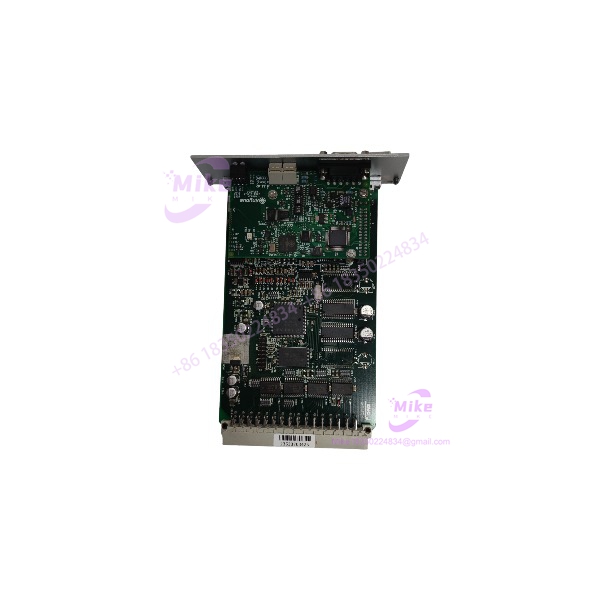
EMG MCU24.2 | XC167 PROFIBUS-DP Processor Card
Product Introduction
A processor card in a legacy strip-guiding controller is not something to substitute by connector shape or approximate function. MCU24.2 is an EMG processor card built around the XC167 platform, with a PROFIBUS-DP fieldbus interface. EMG’s own component-discontinuation documentation specifically lists the MCU24.2 with its PROFIBUS-DP interface in the company’s strip-guiding equipment history.
The card’s job is fundamentally different from an analog sensor interface or output amplifier. It provides the embedded processing layer used by the EMG control system, while PROFIBUS-DP provides the industrial communication path to the surrounding automation architecture. Current industrial component catalogs identify MCU24.2 as an XC167 processor card, with reference 235337 appearing against that configuration.
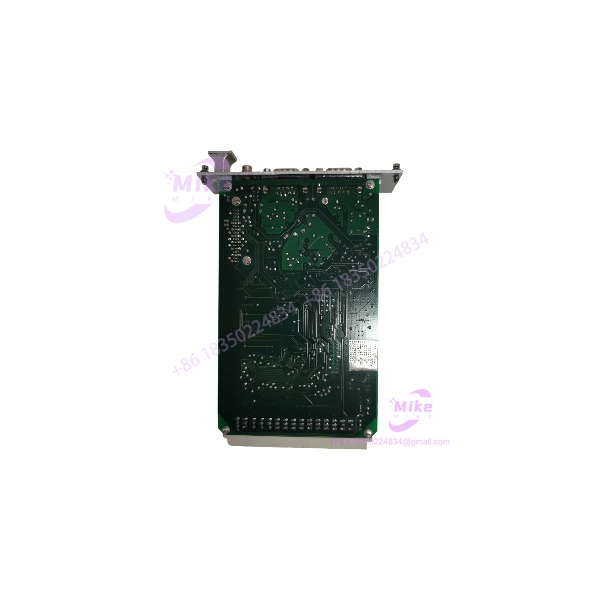
MCU24.2
Key Technical Specifications
- Manufacturer: EMG Automation
- Model: MCU24.2
- Product Type: Processor Card
- Processor Platform: XC167
- Communication Interface: PROFIBUS-DP
- Primary Application: EMG strip-guiding / strip-position control systems
- Control Architecture: Embedded industrial controller hardware
- Board Function: Central processing and fieldbus communication within the associated EMG control system
- Associated Reference: 235337 is documented for the XC167 PROFIBUS MCU24.2 processor card
- Lifecycle: Legacy / discontinued component
- Replacement Context: Maintenance spare for installed EMG equipment
- Configuration Requirement: Exact hardware revision and installed controller configuration should be matched before installation
The available documentation does not provide enough reliable evidence to state a clock frequency, memory capacity, supply voltage, PROFIBUS baud-rate limit, or I/O count for the complete .2 assembly. Those values should not be invented from generic XC167 processor specifications. The identifies the processor family; it does not, by itself, establish every electrical specification of the EMG board.
Application Scenarios & Pain Points
EMG Strip-Guiding System Maintenance
The .2 belongs to the control architecture used for EMG strip-guiding equipment. A failed processor card can stop the controller from executing the required alignment-control sequence even when sensors, hydraulic components, and actuators remain electrically healthy.
Legacy PROFIBUS-DP Architecture
For older machinery, PROFIBUS-DP is part of the system design rather than an optional communications accessory. Replacing the processor with a superficially similar controller can break the communication handshake, parameterization, or device addressing.
Planned Maintenance Spare
A known-good .2 can reduce troubleshooting time during a planned shutdown. This is particularly relevant when the installed equipment depends on a discontinued controller generation and a direct OEM replacement is no longer part of the normal production portfolio.
Strip Alignment / Position Control
EMG documentation places .2 within the historical strip-guiding equipment architecture. The processor should therefore be evaluated as part of the complete control loop — sensor acquisition, control calculation, actuator command, and PROFIBUS communication — rather than as an isolated PLC CPU.
QA & Live Testing SOP
For an , powering the board and seeing LEDs illuminate is not enough. Processor-card testing needs to include communication and application-level verification.
1. Identity Verification
- Confirm EMG manufacturer marking.
- Confirm model.
- Record the complete board/reference number if present.
- Record PCB revision and processor marking.
- Photograph connectors before acceptance.
2. Physical Inspection
- Inspect the PCB for corrosion, contamination, or mechanical damage.
- Examine the processor area for signs of overheating or rework.
- Inspect PROFIBUS connector and associated interface components.
- Check edge connectors for bent, recessed, or oxidized contacts.
- Look for previous repair work around power-supply and communication circuitry.
3. Electrical Pre-Test
- Perform appropriate continuity and isolation checks before installation.
- Verify the target controller’s supply voltage against the machine documentation.
- Check for shorted supply rails.
- Do not apply uncontrolled bench power simply because the board appears to be a standard industrial PCB.
4. PROFIBUS-DP Test
On a compatible EMG test system, verify that the processor initializes correctly and that the PROFIBUS-DP communication path establishes the expected network handshake.
A useful test should verify more than link presence:
- Controller initialization
- PROFIBUS communication
- Correct station/address configuration
- Expected cyclic data exchange
- Diagnostic status
- Application-level response
5. Functional Test
Where the correct EMG test environment is available, exercise representative strip-guiding control functions and verify the complete signal path from measurement input through processor calculation to the associated control output.
6. Packaging
- Use ESD-safe packaging.
- Protect the PROFIBUS connector.
- Prevent mechanical loading on edge connectors.
- Keep the processor board dry and protected from conductive packing materials.
Field Engineer’s Pitfall Guide
❗ Do not treat .2 as a generic PROFIBUS card. The board is an EMG application-specific processor card. A generic PROFIBUS-DP interface cannot replace its embedded control function.
❗ Do not substitute .1 without engineering verification. EMG documentation and current component catalogs distinguish .1 from the -based .2 configuration. .2 is specifically associated with the /PROFIBUS implementation.
❗ Verify the software/application configuration. A processor card can be electrically healthy and still fail to operate correctly if the application firmware, parameters, node configuration, or machine-specific program does not match the target controller.
❗ Check PROFIBUS addressing before blaming the processor. A communication fault may originate from the network configuration, cabling, termination, master configuration, or station address rather than from the .2 itself.
❗ Do not hot-swap by assumption. Confirm the machine’s approved maintenance procedure and isolate stored energy and machine motion hazards before removing a processor card.
Intent-Driven FAQ
What is EMG .2?
is an EMG Automation industrial processor card based on the platform, associated with a PROFIBUS-DP fieldbus interface.
Is .2 a PLC CPU?
It functions as an embedded processor/controller card within EMG equipment, but it should not be represented as a general-purpose Siemens, Allen-Bradley, or standalone PLC CPU. Its hardware and software are tied to the EMG control architecture.
What processor does .2 use?
Available industrial component documentation identifies the board as an processor card.
Does .2 support PROFIBUS?
Yes. EMG’s own discontinuation documentation specifically identifies .2 with a PROFIBUS-DP fieldbus interface.
What is the EMG reference number for .2?
Industrial component catalogs identify 235337 as the reference associated with the PROFIBUS .2 processor card. Because legacy EMG assemblies can carry additional machine-specific numbers, verify the physical nameplate before ordering.
Is .2 obsolete?
It is legacy hardware. EMG’s published discontinuation documentation lists .2 among discontinued components and identifies a newer EMG digital-controller direction in the historical strip-guiding product family.
What should I verify before purchasing .2?
Verify , the complete EMG reference/part number, PCB revision, processor identification, PROFIBUS interface configuration, installed machine type, and application software compatibility. For a running strip-guiding system, those details matter more than a generic description such as “EMG controller card.”





