

Description
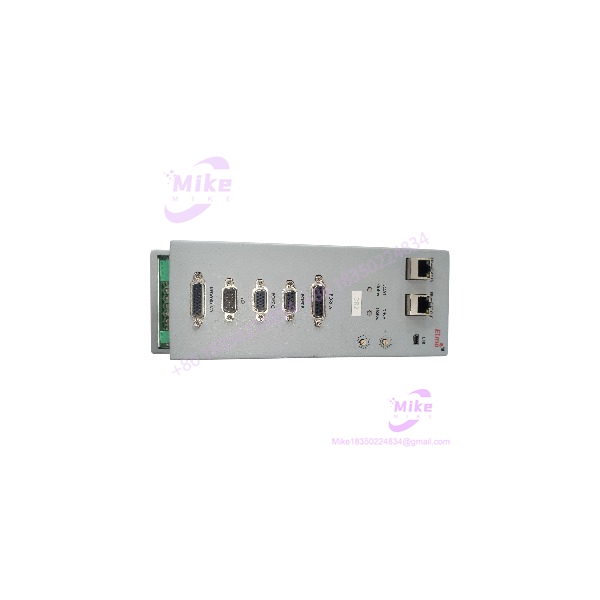
ELMO G-TUB30 | Gold Tuba OEM Motion Control Drive
Product Introduction
The ELMO Motion Control G-TUB30 is a high-power member of the Gold Tuba servo-drive family. Unlike a conventional low-voltage servo amplifier that depends on an external DC bus, the Gold Tuba architecture is designed for direct connection to an industrial AC mains supply, with the drive rectifying the incoming AC internally. Elmo describes the family as capable of accepting up to 3 × 528 VAC and delivering servo power up to the 25 kW class across the product range.
The G-TUB30/480 designation identifies the 480 VAC class and 30 A current class. The exact suffix, however, carries real engineering information. The supplied listing identifies the unit as G-TUB30/480FEHSNA2 and associates it with an AMAT application number. That means the complete suffix should be preserved when sourcing a replacement rather than reducing the description to “G-TUB30.”
For motion-control applications, the Gold Tuba platform supports vector control, sinusoidal and trapezoidal commutation, regenerative braking, and feedback configurations suitable for demanding servo systems. Elmo also specifies USB and Ethernet host communication, with EtherCAT and CANopen available within the Gold Tuba platform.
G-TUB30
Key Technical Specifications
- Manufacturer: ELMO Motion Control
- Series: Gold Tuba
- Base Model: G-TUB30
- Voltage Variant: G-/480
- Full Listing Configuration: G-/480FEHSNA2
- AC Input Architecture: Direct-to-mains
- Voltage Class: 480 VAC
- Maximum Family Input: 3 × 528 VAC
- Current Class: 30 A
- Motor Commutation: Sinusoidal and trapezoidal
- Control Method: Vector control
- Regenerative Braking: Supported
- Feedback: Multiple feedback-sensor configurations supported within the Gold Tuba platform
- Real-Time Network: EtherCAT or CANopen, depending on configuration
- Host Interfaces: USB and Ethernet
- Configuration Software: Elmo Application Studio
- Efficiency: Approximately 99% at family level
- Safety/Standards: Elmo identifies IEC 61800, UL508C, UL60950, and IEC 61800-5-2 compliance for the Gold Tuba family.
Important Note on the FEHSNA2 Suffix
The FEHSNA2 portion should not be ignored.
Publicly available Gold Tuba information confirms that Elmo produced numerous G-/480 variants, including configurations such as G-/480ER and G-/480EESS0. These variants can differ in communication, feedback, safety, and other hardware functions.
For the exact G-/480FEHSNA2, I would not assign individual letters to specific electrical functions without the corresponding Elmo order-code documentation. That avoids a common surplus-market error: reverse-engineering a suffix from a different G-TUB revision and presenting it as an exact specification.
Global Sourcing & Live-Test SOP
A used G-/480FEHSNA2 should be tested as a servo drive, not merely powered up.
- Nameplate verification: Photograph the complete model and serial labels. Confirm every character of G-/480FEHSNA2.
- Application traceability: If the AMAT identifier is present, record it separately from the Elmo OEM model number. The supplied listing associates this configuration with an Applied Materials application.
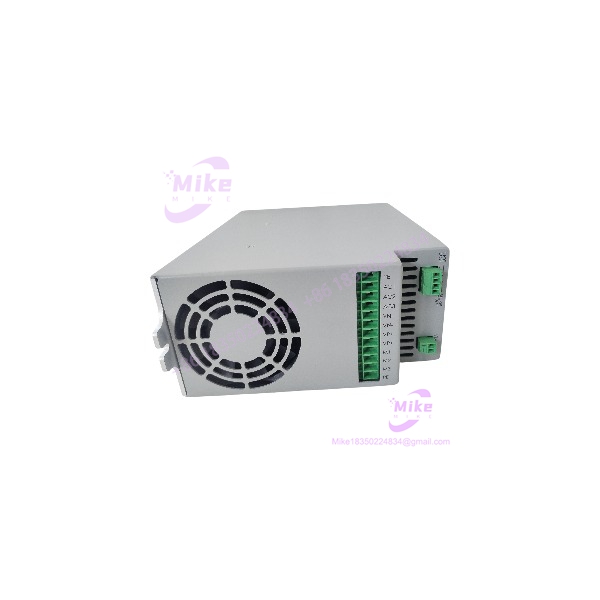
- Physical inspection: Examine power terminals, motor terminals, feedback connectors, communication ports, cooling hardware, mounting points, and enclosure surfaces.
- DC-bus inspection: Before energizing, inspect for evidence of capacitor leakage, overheating, contamination, damaged bus components, or previous repair.
- Controlled power-up: Use the correct three-phase supply and appropriate protection. Do not apply 480 VAC to an unidentified G- variant.
- Software connection: Establish communication using Elmo Application Studio where the required interface and software version are available.
- Parameter backup: Read and save the existing drive configuration before making changes.
- Feedback test: Verify the installed feedback interface with the intended motor/encoder type before enabling closed-loop operation.
- Motor simulation: Where possible, use a controlled motor and appropriate load rather than connecting production machinery during the first test.
- Enable/inhibit test: Verify enable, fault, reset, STO/safety functions where fitted, and drive-ready status.
- Motion test: Command low-speed forward/reverse operation before testing acceleration, deceleration, and higher-speed operation.
- Regeneration test: Monitor the DC bus during controlled deceleration and verify that regenerative behavior remains within the drive’s permitted operating conditions.
- Thermal run: Run the drive under representative load while monitoring heatsink temperature, current, fault status, and cooling performance.
- Final record: Save firmware information, configuration files, feedback type, network settings, fault history, and test results.
A drive that displays no fault code at startup is not necessarily a serviceable servo amplifier. The meaningful test is closed-loop operation under controlled load.
Field Engineer’s Pitfall Guide
❗ 1. Do not substitute a 230 V G- for a 480 V version
The Gold Tuba family includes both and variants. They are not interchangeable merely because both carry the G- designation. Elmo’s published product family explicitly separates these voltage classes.
A replacement must match the machine’s incoming three-phase supply and the exact drive configuration.
❗ 2. The complete suffix matters for feedback and communications
The G- family appears with multiple suffix configurations, including G-/480ER and G-/480EESS0. Available technical records show that the product family supports different network and feedback arrangements.
If the original machine depends on EtherCAT, CANopen, a particular encoder interface, or a safety configuration, verify that function at the complete part-number level.
❗ 3. Do not test a 480 VAC servo drive like a low-voltage amplifier
This is a direct-mains servo drive. The power stage can expose the technician to hazardous AC and stored DC-bus energy even after input power has been removed.
For service work, follow the applicable lockout/tagout and discharge procedure, verify the DC bus with an appropriately rated meter, and do not rely solely on the front-panel status indicator.
Intent-Driven FAQ
What is the ELMO G-?
The is a high-power servo drive in Elmo Motion Control’s Gold Tuba family. It provides direct-mains AC servo control for industrial motion applications.
What does G-/480 mean?
The /480 designation identifies the 480 VAC class of the Gold Tuba drive. The family also includes 230 VAC variants, so the voltage designation is an important part of the model number.
What is the current rating of G-?
The “30” identifies the 30 A class in the Gold Tuba model designation. Exact continuous and peak-current limits should be checked against the applicable Elmo technical documentation for the specific suffix and operating conditions.
Can G- drive a brushless servo motor?
Yes. Elmo describes the Gold Tuba family as supporting sinusoidal and trapezoidal commutation with vector control, making it suitable for brushless servo applications as well as other supported motor configurations.
What software is used to configure G-?
Elmo specifies Elmo Application Studio for setup and tuning of Gold Tuba drives. The software is used for drive configuration, motor setup, tuning, and diagnostic work.
Does G- support EtherCAT?
The Gold Tuba family supports EtherCAT and CANopen, but the exact network capability depends on the particular drive configuration. Do not assume that every G- suffix has the same communication hardware.
Is the supplied G-/480FEHSNA2 new or used?
The supplied eBay listing identifies the unit as used. The listing title identifies it as G-/480FEHSNA2 and associates it with an AMAT application number. The eBay item specifics, however, show the brand as “Unbranded” and MPN as “do not apply,” so the actual nameplate should be checked before treating the unit as OEM-traceable inventory.
Procurement Notes
The ELMO Motion Control G-/480FEHSNA2 should be sourced by its complete configuration, not simply as a G-. The Gold Tuba family covers multiple voltage classes and option combinations, while the supplied listing specifically identifies the 480 VAC version with the FEHSNA2 suffix.
For a machine-replacement application, request photographs of the actual Elmo nameplate, power terminals, feedback connectors, communication ports, and firmware/configuration information. Also verify whether the original application uses EtherCAT, CANopen, a particular encoder, safety function, or custom machine parameters.
The direct-mains architecture makes correct voltage and commissioning procedure non-negotiable. A visually identical G- with a different suffix should not be treated as a plug-in replacement without configuration verification.





