


Description
Delta Tau ACC-24E2 | 4-Axis Digital Interface Module
Dynamic Product Introduction
Expanding a multi-axis industrial motion controller without sacrificing loop update rates or signal integrity requires modular hardware built for dense rack environments. The Delta Tau ACC-24E2 plugs directly into the high-speed UBUS backplane of a UMAC or MACRO station, supplying robust multi-channel servo and encoder interface capacity.
Whether you are configuring direct Pulse-Width Modulated (PWM) commands for high-performance amplifiers or pulse-and-direction signals for stepper drives, this board acts as the critical physical bridge. Honestly, keeping legacy UMAC systems running smoothly relies on verifying that your expansion card configurations match your exact firmware build, ensuring encoder clock scaling and flag inputs communicate flawlessly with the central CPU.
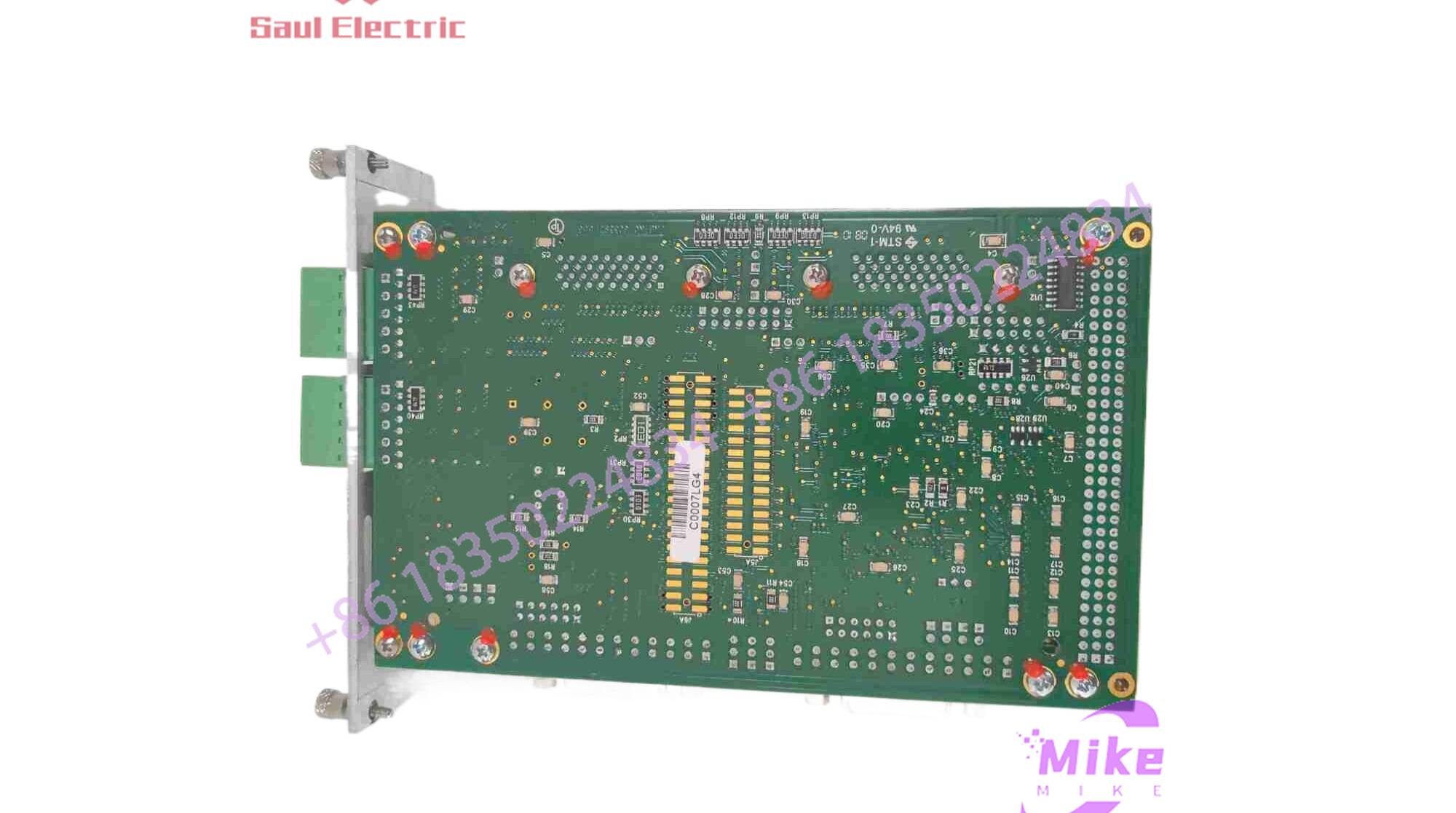
ACC-24E2
Key Technical Specifications
| Parameter | Specification Detail |
| Primary Architecture | PMAC2-style 4-Channel Servo IC (DSPGATE1 core) |
| System Compatibility | UMAC Turbo, Turbo PMAC2, and compatible MACRO Stations |
| Control Outputs | Direct Digital PWM phase voltage or Pulse-and-Direction (PFM) |
| Feedback Inputs | Digital quadrature encoders (differential line receiver) or optional analog sinusoidal interfaces |
| Encoder Sampling Clock | Default 9.83 MHz (software adjustable) |
| Auxiliary I/O | Over-travel flags, amplifier fault inputs, amplifier enable, and hardware position compare |
| Form Factor & Mounting | 3U industrial rack-mount module (uses backplane expansion bus) |
| Slot Utilization | Base card occupies 1 slot (2 axes); adding Option 1 expansion utilizes an adjacent secondary layer/slot |
Global Sourcing & Live-Test SOP
Sourcing surplus or legacy Delta Tau motion hardware demands meticulous component checks to verify that custom ASIC chips and line transceivers remain fully functional. Our testing protocol guarantees readiness:
- Inbound Verification: Board part numbers, suffix revisions, and connector pins are audited against OEM specifications. Edge connectors and expansion bus fingers are checked for oxidation or bending.
- Live Rack Simulation: The card is loaded onto a dedicated UMAC Turbo test rack. We verify that the central CPU recognizes the expansion module ID across the UBUS without communication dropouts.
- Diagnostics: Using a multi-axis simulator, we inject high-frequency quadrature signals into the encoder channels while exercising the PWM/step outputs. We confirm error-free position latching, hardware compare trigger accuracy, and flag state transitions.
- Final Prep: Approved inventory is cleaned, fitted with connector protective caps, and sealed in heavy-duty anti-static barrier bags.
The Field Engineer’s Pitfall Guide
❗ Backplane Bus Loading Limits: A single UMAC rack can support up to eight ACC-24E2x boards (providing up to 32 additional axes), but MACRO-station CPUs are typically restricted to fewer channels. Over-allocating expansion cards beyond system CPU limits will cause configuration faults on boot.
❗ Encoder Grounding and Shielding: Because the differential line receivers are highly sensitive to electrical noise, leaving encoder cable shields ungrounded at the chassis clamp will inject high-frequency common-mode noise, leading to erratic position jumps or “following error” trips.
❗ Option 1 Layering Confusion: The base card natively handles initial axes, while the “Option 1” piggyback board brings out the remaining channels of the onboard IC. Mixing up terminal block assignments or command wiring between base layers during replacements will result in inverted axis response or missing control loops.
Intent-Driven FAQ
Can the ACC-24E2 be used with both servo and stepper motors?
Yes. The board supports both direct digital PWM commands for servo amplifiers and pulse-and-direction (PFM) outputs for stepper motor drives.
How many axes does a single ACC-24E2 card support?
The base card features a 4-channel Servo IC. Depending on whether you use the base layout or the stacked Option 1 expansion configuration, it can natively handle 2 to 4 axes of control per physical slot footprint.
Do I need to modify my PMAC software configuration when swapping this board?
If you are replacing an exact, failed hardware match with the same jumper and firmware settings, the existing software configuration will run immediately. However, ensure your encoder conversion tables match the exact channel address mapping.
Is the ACC-24E2 hot-swappable?
No. Always power down the UMAC rack completely before inserting or removing expansion modules to prevent voltage spikes from damaging the UBUS backplane or internal IC gates.
What warranty is included with surplus units?
Every unit shipped from our stock is backed by a comprehensive 12-month operational warranty covering internal gate array integrity, signal transceivers, and power regulation circuits.





