

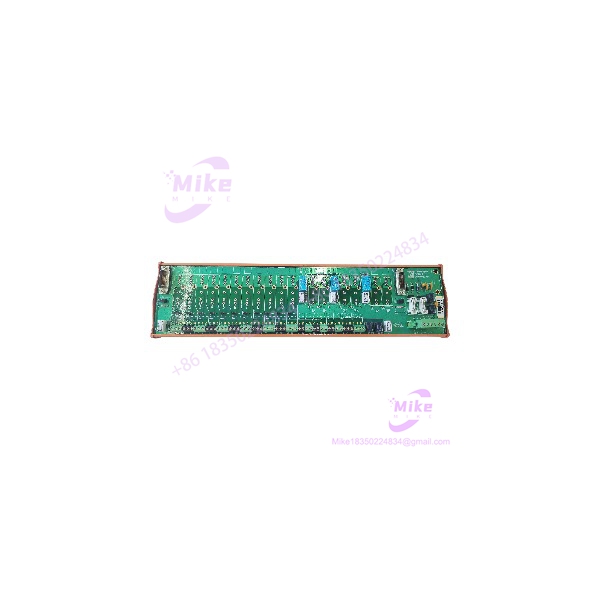
Description
Compressor Controls Corporation FTA-544 | Duplex Analog FTA
Dynamic Product Introduction
The FTA-544 is not a generic analog terminal board that can be substituted by matching terminal count. It belongs to a specific CCC Vanguard architecture, and its value is in providing the correct field termination interface for the system’s duplex analog I/O.
Compressor Controls Corporation documentation places the FTA-544 in the Vanguard Series 5 hardware family as the Local FTA (Duplex Analog). The same documentation set distinguishes it from the FTA-543 simplex analog unit, FTA-553 simplex discrete unit, and FTA-554 duplex discrete unit. That distinction matters when restoring a redundant compressor-control system because “analog FTA” is not enough information to establish compatibility.
For procurement, the FTA-544 should therefore be matched against the installed Vanguard controller, local I/O card, transition hardware, and approved system configuration. The current marketplace listing identifies the item as a Series 5 duplex analog FTA and describes the physical unit as new open-box inventory.
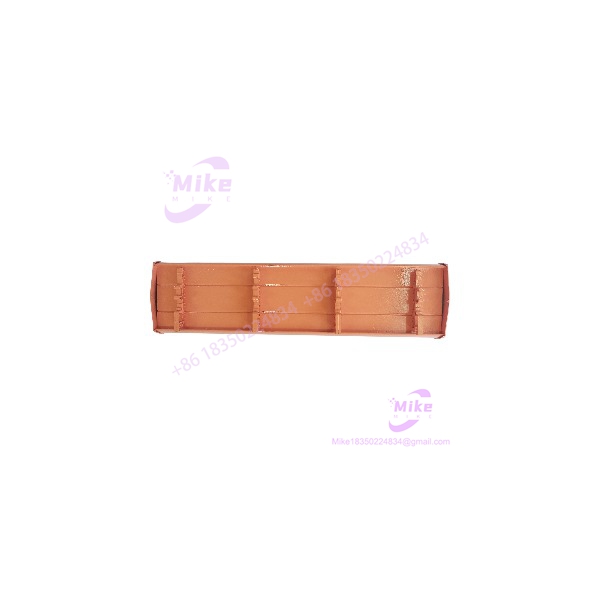
FTA-544
Key Technical Specifications
- Model: FTA-544
- Manufacturer: Compressor Controls Corporation
- System Family: CCC Vanguard Series 5
- Component Type: Local Field Termination Assembly
- I/O Classification: Duplex Analog
- Documentation Reference: DS5205
- Controller Architecture: Vanguard Series 5 local I/O
- Application: Compressor and turbomachinery control systems
- Redundancy Role: Duplex analog field termination
- Signal Category: Analog field I/O
- Installation Context: CCC local I/O architecture
- Related FTA: FTA-543 — simplex analog
- Related FTA: FTA-554 — duplex discrete
- Related FTA: FTA-553 — simplex discrete
CCC’s published documentation index explicitly lists DS5203 for the FTA-543, DS5205 for the FTA-544, DS5204 for the FTA-553, and DS5206 for the FTA-554. This makes the ‘s duplex-analog identity substantially clearer than marketplace titles alone.
One important procurement limitation: publicly indexed sources identify the ‘s system role, but I would not invent channel counts, input/output ranges, excitation values, isolation ratings, or connector pinouts without the actual DS5205 technical sheet. Those parameters need to come from the applicable CCC documentation or the customer’s approved drawings.
Global Sourcing & Live-Test SOP
Inbound Verification
For an , the first inspection is architectural identification.
Verify:
- Exact model marking.
- Hardware revision or assembly revision where present.
- Manufacturer markings and serial/traceability information.
- Connector condition and keying.
- Terminal condition and evidence of rework.
- PCB contamination, corrosion, bent pins, or damaged hardware.
- Configuration against the customer’s Vanguard Series 5 bill of material.
The procurement record should identify the unit as duplex analog, not simply “Series 5 FTA.” CCC’s own documentation makes that distinction explicit.
The marketplace unit referenced for this purchase is described as new, open box, so the incoming inspection should verify the physical condition independently rather than treating the seller’s condition description as a technical acceptance test.
Live Simulation
The correct test environment is a representative CCC Vanguard Series 5 rack using the appropriate local I/O hardware.
Install the according to the approved hardware configuration and verify the complete signal path from the controller-side I/O hardware through the FTA to the simulated field device.
For analog channels, use calibrated signal sources rather than simply checking terminal continuity. Inject representative analog values and verify that the controller reports the expected values on the intended channels.
For a duplex architecture, test both sides independently and then validate the redundancy behavior defined by the system configuration.
Diagnostics
A practical acceptance procedure should include:
- Connector and terminal inspection.
- Point-to-point continuity checks where appropriate.
- Analog signal injection.
- Channel identification verification.
- Input scaling verification.
- Redundant-path verification.
- Diagnostic/alarm review at the controller.
- Verification that field channel mapping agrees with the approved drawing.
A Fluke-class multimeter is useful for basic voltage and continuity checks, while a calibrated process signal source is preferable for meaningful analog verification.
Do not use a simple resistance check as proof that the is operational. A terminal can have perfect continuity and still be associated with the wrong channel, incorrect scaling, or a defective signal path.
Final Prep
Before releasing the to stock:
- Record model and hardware revision.
- Record serial/assembly identification.
- Photograph connectors and terminal areas.
- Record the test configuration.
- Record analog simulation results.
- Package using ESD-conscious handling.
- Protect connectors from mechanical damage.
- Retain the inspection report with the inventory record.
For surplus industrial controls hardware, traceability is part of the product.
The Field Engineer’s Pitfall Guide
❗ Warning 1 — Do not confuse with FTA-543.
Both belong to the Vanguard Series 5 local FTA family, but CCC identifies the FTA-543 as simplex analog and the as duplex analog. Substituting based only on the word “analog” can compromise the intended redundancy architecture.
❗ Warning 2 — Verify the local I/O card before installing the .
The FTA does not define the entire I/O system by itself. The controller-side I/O hardware, transition/interface hardware, field termination, and configuration have to agree. I’ve seen maintenance teams replace a terminal assembly correctly by part number and still end up with a nonfunctional loop because the upstream I/O architecture was different.
❗ Warning 3 — Never assume the terminal assignment from a visually similar FTA.
Analog field wiring is particularly unforgiving. A physically compatible connector does not establish channel identity, signal type, scaling, or redundancy assignment. Compare every termination against the approved CCC drawing before reconnecting field wiring.
One additional concern is test methodology. If the application involves compressor antisurge, performance, speed, or other control loops, changing an analog termination path can affect a live control variable. Isolate and simulate the loop before making assumptions about what a “good” replacement looks like.
Intent-Driven FAQ
What is the CCC used for?
The is a Vanguard Series 5 Local FTA for Duplex Analog applications. CCC’s documentation index specifically identifies it under DS5205.
Is the a controller or CPU?
No. It is a field termination assembly. The control logic resides in the associated CCC controller architecture; the provides the field-side interface for the applicable analog I/O system.
Is the for redundant analog signals?
Its CCC classification as Duplex Analog indicates that it belongs to the duplex analog local FTA architecture. The exact redundancy behavior still depends on the associated controller/I/O configuration and application design.
Can I replace an FTA-543 with an ?
Not as a blanket substitution. CCC identifies the as simplex analog and the as duplex analog. If the existing system was engineered for simplex operation, installing a duplex FTA does not automatically convert the architecture.
Does the contain firmware?
No. It is a field termination assembly rather than a programmable CPU. Firmware compatibility is therefore not the primary replacement issue. Hardware revision, controller compatibility, wiring, channel assignment, and the associated I/O architecture are more important.
How should I test a surplus ?
Start with physical inspection and identification, then perform continuity and isolation checks as applicable. The meaningful test is an installed-system simulation using the correct Vanguard Series 5 I/O hardware, with calibrated analog signals injected into the appropriate channels and controller diagnostics monitored.
Is the still available from CCC?
The is documented in CCC’s Vanguard Series 5 documentation as the Local FTA (Duplex Analog). Marketplace availability is separate from OEM lifecycle status, so procurement should verify the exact hardware revision and approved replacement status before treating any surplus unit as a production replacement.
What condition is the listed ?
The referenced marketplace listing describes the as new open-box inventory. That is a commercial condition description, not evidence of electrical acceptance testing, so a buyer requiring production-critical hardware should still require documented inspection and functional verification.





