


Description
Cisco CSACS-1121-K9 | Secure Access Control Server 1121 Appliance
Dynamic Product Introduction
Enterprise network security relies on absolute visibility, granular policy enforcement, and reliable device administration to prevent unauthorized access. When legacy network infrastructure requires dedicated hardware control nodes for user identity management, deploying a verified Cisco CSACS-1121-K9 appliance restores centralized AAA security handling.
Engineered as a purpose-built, security-hardened server running Cisco Secure ACS software, this platform seamlessly integrates with external databases like Active Directory and LDAP to manage device administrator logins and remote access policies. Deploying a verified CSACS-1121-K9 unit ensures stable policy execution, transparent audit logging, and uninterrupted authentication services across mission-critical networks.
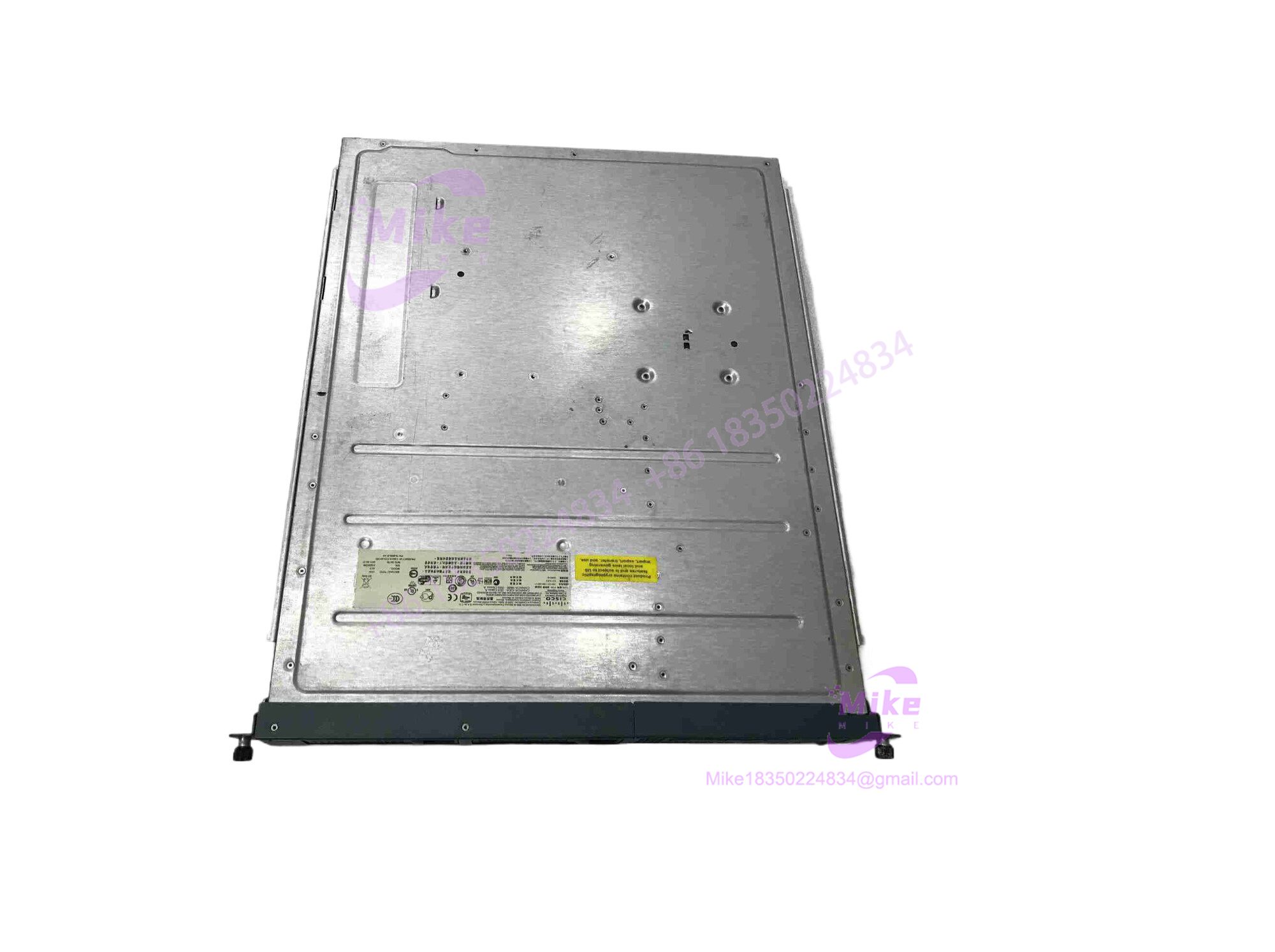
CSACS-1121-K9
Key Technical Specifications
| Core Parameter | Technical Specification |
| Product Model | CSACS-1121-K9 (Cisco Secure ACS 1121 Appliance) |
| Manufacturer | Cisco Systems |
| Enclosure Form Factor | 1U Rack-Mountable Security Appliance |
| Processor Architecture | Intel Core 2 Quad (approx. 2.66 GHz) |
| System Memory | 4 GB standard DDR2 SDRAM |
| Storage Subsystem | Dual 250 GB SATA Hard Disk Drives (RAID capable configuration) |
| Networking Interfaces | 4 x Gigabit Ethernet (10/100/1000 Mbps) RJ-45 ports |
| Management / Serial Ports | 1 x RS-232 DB-9 serial console, 4 x USB 2.0 ports |
| Supported Protocols | TACACS+, RADIUS, EAP-FAST, PEAP, LEAP, PAP, CHAP, MS-CHAP |
| Operating Temperature | 10°C to 35°C (50°F to 95°F) enterprise data center threshold |
Global Sourcing & Live-Test SOP (Transparency Core)
Acquiring legacy or end-of-life enterprise security hardware through secondary markets requires an exhaustive verification workflow to guarantee system integrity, clean flash deployment, and data security.
- Inbound Verification: Incoming CS-1121 units undergo high-magnification optical inspection of internal motherboard components, RAM seating, power supply capacitors, and chassis tamper seals.
- Live Simulation: Technicians connect the appliance to a secure test bench via the DB-9 console port, initiating a clean power-on sequence to verify BIOS execution and hardware health flags.
- Diagnostics: Engineers execute full-scale memory address sweeps, hard drive sector health checks via SMART utilities, multi-port Ethernet ping/throughput tests, and a 24-hour thermal soak run.
- Final Prep: Hardware units receive complete configuration wiping (factory default reset), firmware version logging, static-dissipative wrapping, and custom vacuum sealing inside heavy-gauge moisture-barrier ESD shielding bags.
The Field Engineer’s Pitfall Guide
❗ Active Interface Restrictions: On standard Cisco ACS 1121 appliances, Cisco software natively routes traffic primarily through designated ports (such as Gigabit Ethernet 0 for management/operations), while secondary ports may remain locked or restricted until explicitly configured through the CLI setup script.
❗ Console Speed and Initial Setup: Failing to set terminal emulation software to standard Cisco parameters (9600 baud, 8 data bits, no parity, 1 stop bit) will result in unreadable garbage text during initial serial console troubleshooting.
❗ Database Synchronization Timeouts: When integrating a replacement ACS node into an existing distributed deployment, mismatched pre-shared keys or outdated root keys can block incremental database replication loops. Always ensure deployment keys match the primary instance.
Intent-Driven FAQ
Will swapping this CSACS-1121-K9 appliance preserve my previous ACS configuration database?
No. Physical hardware replacement requires restoring a valid backup configuration file generated from your previous ACS deployment or manually re-enrolling the node into your primary-secondary distributed architecture.
Are these units original factory hardware or refurbished surplus?
Inventory pools span fully certified, tested surplus and refurbished enterprise-grade hardware that undergoes strict functional and storage validation prior to dispatch.
What software version is typically pre-loaded on this appliance?
Units generally ship with a baseline Cisco Secure ACS 5.x software image (such as version 5.1, 5.2, or 5.3), which can be upgraded depending on your active Cisco support entitlements and license status.
Is the Cisco ACS platform still actively supported by Cisco?
No. Cisco Secure ACS has reached End-of-Life (EOL) / End-of-Support, with Cisco recommending migration to Cisco Identity Services Engine (ISE) for modern policy management requirements.
What kind of warranty accompanies a replacement security appliance?
All supplied units carry a comprehensive 1-year operational warranty covering internal component health, power supply reliability, and port integrity.
Are you deploying this CSACS-1121-K9 appliance into an active network lab, or utilizing it as a direct hot-spare replacement for an existing infrastructure node?





