

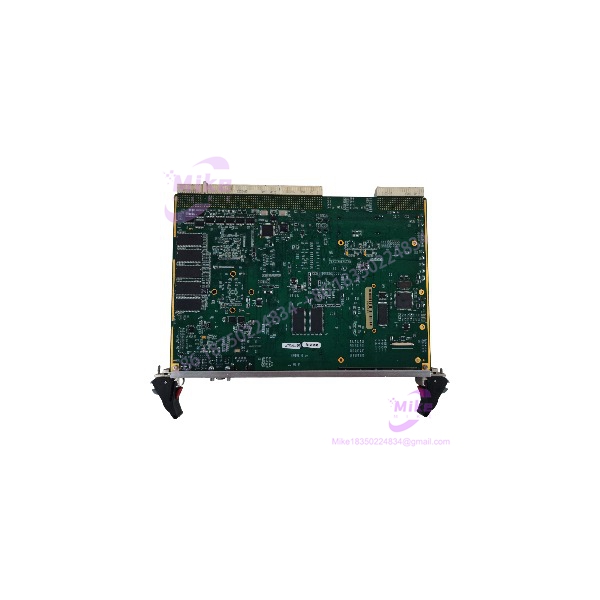
Description
CCC MCP-1004 | Compressor Control CPU Board
Product Introduction
The Compressor Control Corp MCP-1004 is an industrial compressor-control processor used within CCC compressor-control systems. Available supplier references describe it as a main processor unit, CPU module, or circuit control board, rather than a conventional general-purpose PLC.
Its role is to execute compressor-specific control logic and process information associated with compressor operation. Third-party descriptions associate the MCP-1004 with functions such as anti-surge control, capacity control, process-variable monitoring, sequencing, and protection. These functions depend on the complete CCC system configuration and should not be treated as standalone capabilities of an unidentified board revision.
The supplied marketplace listing identifies the unit as “Compressor Control Corp MCP-1004 XES XCalibur1004” and, importantly, states “For parts or not working.” For procurement, this means the listing should be treated as a repair candidate or parts source unless the seller provides separate evidence of functional testing.
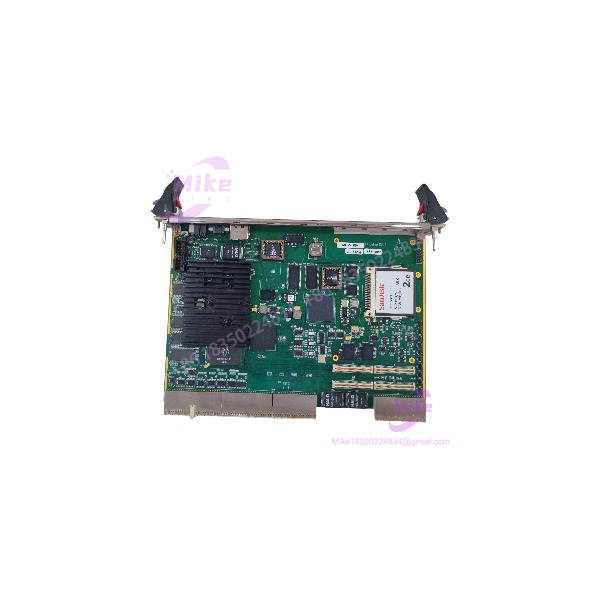
MCP-1004
Key Technical Specifications
- Model: MCP-1004
- OEM: Compressor Controls Corporation (CCC)
- Product Category: Compressor control processor / control board
- Associated Platform: XCalibur1004 / XES
- Application: Industrial compressor control
- Typical Compressor Types: Centrifugal and axial compressor applications
- Control Role: Compressor control and protection processing
- Anti-Surge Application: Supported within applicable CCC system configurations
- Capacity Control: Associated with MCP-series compressor-control applications
- Process Variables: Pressure, flow, temperature, speed, and related compressor operating parameters may be handled by the overall control system
- System Integration: Designed to operate as part of a CCC compressor-control architecture rather than as an isolated PLC
- Listing Condition: For parts or not working
Specifications requiring revision-level verification
Some aftermarket references publish detailed MCP-1004 specifications including processor speed, memory, exact I/O count, operating temperature, and communication protocols. However, these specifications are not consistently reproduced across independent sources. For that reason, I would not use figures such as 1 GHz CPU, 128 MB RAM, 256 MB Flash, 24-channel digital I/O, or specific Ethernet/Profibus options as OEM-confirmed specifications without the corresponding CCC documentation for the actual board revision.
That distinction is important when this part is being used for an engineering replacement rather than simply identified for resale.
Global Sourcing & Live-Test SOP
For a legacy compressor controller, the receiving procedure should establish whether the board is a usable replacement, a repair candidate, or parts-only stock.
Recommended incoming inspection procedure:
- Model verification
Confirm the board is marked and identify the XCalibur/XES designation where present. - Revision capture
Record PCB revision, firmware identification, serial number, processor/board revision, and all label information. - Physical inspection
Check the PCB, connectors, processor section, memory devices, terminal/interface hardware, and mounting points for corrosion, contamination, cracked components, or unauthorized repair. - Battery and memory inspection
Where the particular board revision contains battery-backed memory or configuration storage, inspect the battery condition and preserve configuration data before applying power. - Configuration preservation
If removing a working from an operating compressor system, back up the application configuration and document installed firmware before replacement. - Controlled power-up
A qualified test facility should use the correct CCC-compatible test environment rather than applying arbitrary bench power to an unknown board. - Diagnostic verification
Check processor startup, diagnostic indicators, communication interfaces, and system-level fault reporting. - I/O verification
Where supported by the test setup, verify representative analog and discrete channels against known reference signals. - Control-function verification
Do not test anti-surge or compressor-control behavior on a live process merely to qualify a spare. Use an approved simulator or CCC test environment where available. - Test report
Document exactly which functions were tested and which were not tested. - ESD packaging
Package the controller in ESD-safe material with sufficient mechanical protection for international shipment.
Procurement disclosure: This is a recommended qualification procedure. It does not indicate that the eBay unit has passed any of these tests. The supplied listing specifically identifies the unit as for parts or not working.
Field Engineer’s Pitfall Guide
Warning 1 — Treat the as a system component, not a generic PLC.
The board is designed for CCC compressor-control applications. A replacement requires compatibility with the installed XCalibur/control-system architecture, firmware, configuration, I/O hardware, and communications—not simply matching the label.
Warning 2 — Do not load a replacement with the wrong application configuration.
Compressor-control parameters can include process-variable scaling, control-loop configuration, anti-surge characteristics, valve behavior, sequencing, alarms, and trip logic. Preserve and verify the existing configuration before commissioning a replacement processor.
Warning 3 — “For parts or not working” means exactly that.
The supplied listing does not establish operational status; it explicitly states the condition as For parts or not working. Do not describe this particular unit as tested, functional, refurbished, or ready for installation unless the seller provides separate evidence supporting that claim.
Frequently Asked Questions
Q1: What is the CCC ?
It is a Compressor Controls Corporation compressor-control processor/control board associated with CCC’s MCP/XCalibur architecture. Supplier references describe it as a CPU or main processor unit for compressor-control applications.
Q2: What is XCalibur1004?
The supplied marketplace listing identifies the as XES XCalibur1004. XCalibur is associated with CCC’s compressor-control system environment.
Q3: What compressors can the control?
Available references associate the with industrial compressor applications, including centrifugal and axial compressors. The exact control functions depend on the installed CCC system configuration.
Q4: Is a PLC?
It performs processor/control functions similar to an industrial controller, but it should be treated as a CCC-dedicated compressor-control processor, not as a generic Siemens, Rockwell, or other general-purpose PLC replacement.
Q5: What should be backed up before replacing an ?
Preserve the application configuration, firmware information, I/O assignments, communication settings, control parameters, alarm/trip configuration, and any CCC-specific compressor-control data available from the installed system.
Q6: Can a used be installed directly?
Not without compatibility verification. Confirm hardware revision, firmware, application configuration, associated I/O hardware, communications, and the CCC system architecture before commissioning.
Q7: Is the eBay unit functional?
The supplied listing states “For parts or not working.” It should therefore be treated as nonfunctional/repair stock unless the seller provides separate, credible functional-test evidence.
Q8: Are detailed specifications such as CPU speed and memory confirmed?
Not sufficiently from the sources reviewed. Several third-party sites publish detailed numbers, but they are inconsistent. For engineering procurement, use the actual board revision and CCC documentation rather than assuming those aftermarket specifications apply to every .





