


Description
B&R ECCP70-01 | MULTI CPU Type B Controller
Product Introduction
A dead CPU in a legacy B&R controller does not necessarily mean the machine needs a complete controls retrofit. ECCP70-01 is the Type B MULTI CPU built for B&R’s older rack-based control architecture, where processor, application-memory, and communication functions were handled through dedicated modules.
This is a CP70-class controller, not a modern Automation Studio CPU. The unit provides 42 KB SRAM for up to 42K instructions, supports 7,168 registers and 800 flags, and includes a real-time clock. Its communication hardware includes a TTY online interface plus an RS485/RS232/TTY application interface, with RS485 electrically isolated and network-capable.
One detail deserves attention: the application PROM/memory module is not included with ECCP70-01 and must be ordered separately according to B&R’s documentation.
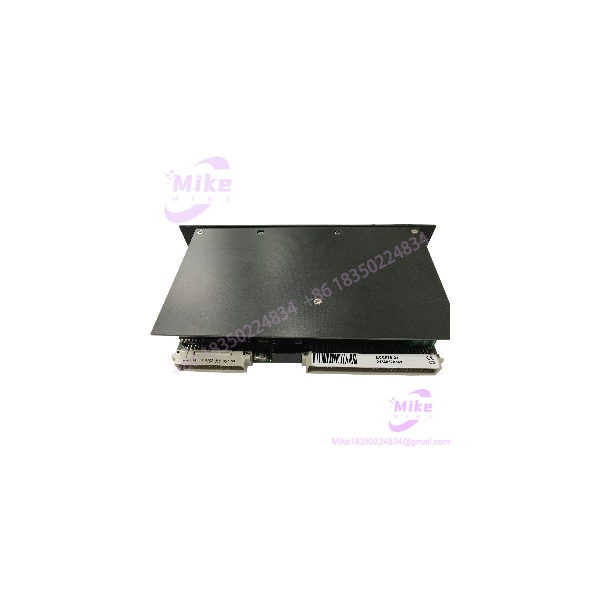
ECCP70-01
Key Technical Specifications
| Parameter | ECCP70-01 Specification |
|---|---|
| Manufacturer | B&R |
| Part Number | ECCP70-01 |
| CPU Type | MULTI CPU Type B |
| CPU Family | CP70 |
| Application Memory | 42 KB SRAM |
| Maximum Program Size | 42K instructions |
| Registers | 7,168 |
| Flags | 800 |
| Real-Time Clock | Yes |
| Online Interface | TTY, electrically isolated receiver |
| Application Interface | RS485 / RS232 / TTY |
| RS485 | Electrically isolated, network-capable |
| RS232 | Not electrically isolated |
| TTY | Electrically isolated receiver |
| Rack Compatibility | B&R MULTI / MIDI module racks |
| Application PROM | Not included; ordered separately |
| Certification | CE |
B&R’s own product page confirms the MULTI/MIDI rack compatibility and communication-interface architecture.
Historical B&R documentation additionally identifies the CP70 as supporting 512 hardware timers, with selectable processing performance of approximately 1.7 ms/K instructions or 2.5 ms/K instructions depending on CPU revision.
Application Scenarios & Pain Points
Legacy MULTI/MIDI Rack Replacement
With ECCP70-01:
A failed CP70 CPU can be replaced while retaining the existing B&R rack architecture, field wiring, and established application structure.
Without a matching CPU:
The machine may sit idle while the engineering team considers an unnecessarily large controls migration.
That distinction matters on older production equipment. Replacing one obsolete processor is often a very different project from rebuilding an entire PLC cabinet.
When the Existing Application Memory Must Be Preserved
The CPU itself does not include the separate PROM application-memory module. This is one of the first things to verify when sourcing a replacement.
If the original controller’s application memory module is still available and compatible, the replacement CPU may be considerably simpler than recreating the machine program from scratch.
RS485 Networked Equipment
The application interface supports RS485, and B&R specifies this interface as electrically isolated and network-capable. That makes the relevant to older distributed-control installations where the CPU communicates with other equipment over a serial network.
Machine Retrofit With Minimal Hardware Change
For a production machine built around MULTI or MIDI racks, maintaining the original processor family can reduce the scope of a repair. You avoid immediately changing I/O addressing, cabinet wiring, application logic, and legacy operator interfaces—assuming the rest of the system remains serviceable.
High-Risk Obsolescence
is no longer a normal current-generation controller. B&R’s current product page still provides the model information, while industrial replacement sources identify the part as discontinued.
For a machine that cannot tolerate an extended outage, keeping a tested spare is a sensible lifecycle decision.
QA & Live Testing SOP
For , a visual inspection is only the beginning.
Our preferred incoming inspection sequence:
- Model Verification
- Confirm the B&R identification label.
- Verify the complete designation.
- Record hardware/revision markings before installation.
- Physical Inspection
- Inspect the PCB and rack connector.
- Check for oxidation, damaged contacts, cracked components, and previous repair work.
- Inspect the CPU’s status indicators and reset controls.
- Controlled Power-Up
- Install the CPU in a compatible MULTI/MIDI test rack.
- Apply the correct rack supply.
- Monitor startup behavior and status indications.
- Check for abnormal current consumption.
- Communication Verification
- Test the TTY online interface.
- Verify the application communication interface.
- Where the customer’s configuration uses , confirm the actual communication handshake rather than relying on interface activity alone.
- Application Verification
- Confirm that the application-memory module is present when required.
- Verify that the controller recognizes the installed memory.
- Confirm program execution and I/O communication where a complete test rack is available.
- ESD Protection
- Package the CPU in ESD-safe material.
- Protect the rack connector against mechanical impact.
- Use anti-static packaging throughout handling and shipment.
Engineer-to-engineer point: powering a CPU and seeing LEDs illuminate is not a functional test. For obsolete PLC hardware, the meaningful test is processor startup plus application-memory recognition plus communication behavior.
Field Engineer’s Pitfall Guide
❗ Do not confuse with the later B&R controller generations
The belongs to the legacy MULTI/MIDI architecture. It should not be treated like a modern B&R X20 or Automation Studio controller.
The programming environment and system architecture are different. Historical documentation identifies CP70 programming through the B&R PROgramming SYStem, so software availability can become a major issue during troubleshooting.
❗ The application-memory module is a separate item
This catches buyers regularly.
B&R specifically states that the PROM application memory must be ordered separately. If your original CPU contains a memory module, preserve and verify that component before assuming a replacement CPU will arrive with the machine program already installed.
❗ Do not assume RS232 and have the same electrical protection
B&R specifies the interface as electrically isolated, while RS232 is not electrically isolated. That distinction matters when diagnosing ground potential differences, communication instability, and field wiring problems.
Intent-Driven FAQ
Can replace a failed B&R CP70 CPU?
Yes, when the existing system is designed around the compatible Type B /MULTI architecture. Verify the hardware revision, rack type, application-memory module, and communication configuration before installation.
Is B&R compatible with MULTI and MIDI racks?
Yes. B&R explicitly specifies that can be used in MULTI/MIDI module racks.
How much memory does have?
The controller provides 42 KB SRAM for a maximum of approximately 42K instructions. Historical B&R documentation also lists 7,168 registers and 800 flags.





