

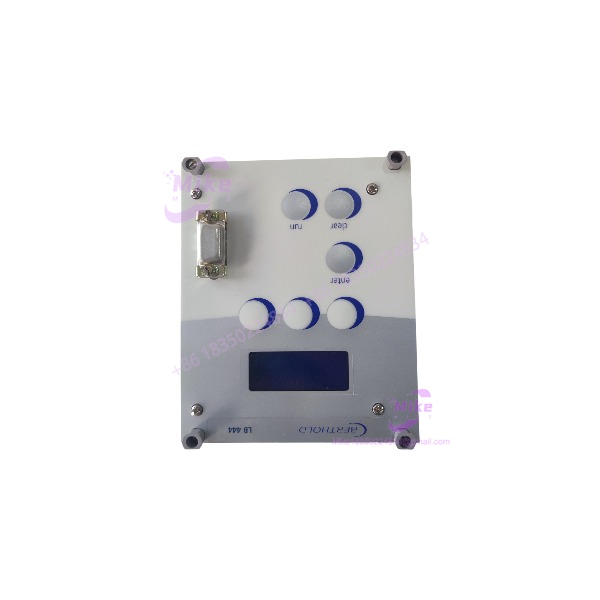
Description
Berthold LB 444-01 | Radiometric Density Measurement Unit
Product Introduction
In radiometric process measurement, the analyzer is only one part of the installed measurement chain. The Berthold LB 444 is a non-contact density meter used to measure process media without inserting a conventional sensor into the product stream. It uses a gamma source and scintillation detector, with the evaluation electronics processing the detector signal into a density measurement.
The Berthold LB 444-01 designation is associated with the LB 444 processor/evaluation unit in available equipment records. However, the LB 444 family also includes separately numbered detector assemblies. Buyers should verify the physical unit and its full type designation before assuming that an LB 444-01 listing includes a detector, source, shielding, or a complete operating system.
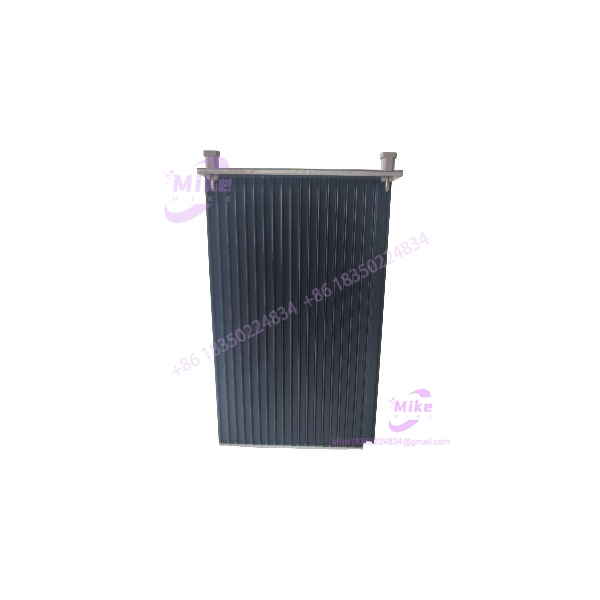
LB 444-01
Key Technical Specifications
The following specifications describe the LB 444 system family. Confirm the exact LB 444-01 variant against its nameplate and documentation before using them as acceptance criteria.
- Manufacturer: Berthold Technologies
- System Family: LB 444 Density Meter
- Measurement Type: Radiometric, non-contact density measurement
- Measurement Principle: Gamma-ray attenuation and scintillation detection
- Evaluation Unit Format: 19-inch rack module, 3 HE, 21 TE
- Evaluation Unit Protection: IP20
- Evaluation Unit Supply Options: 115/230 VAC or 18–32 VDC, depending on version/documentation
- Typical Power Consumption: Approximately 30 VA (AC) or 30 W (DC)
- Detector Architecture: Separate detector connected to the evaluation unit by a two-wire cable
- Detector Technology: NaI(Tl) scintillation counter for applicable detector versions
- Analog Output: Isolated 0/4–20 mA; maximum load 500 Ω
- Digital Outputs: Relay outputs for threshold and collective-fault functions
- Serial Interfaces: RS-232 and RS-485 are documented for the LB 444 platform
- Operating Temperature: Evaluation unit typically 0 to +50°C; detector limits depend on detector type and cooling arrangement
These are platform-level specifications, not confirmation that every listed interface or electrical option is present on the offered LB 444-01 assembly.
Global Sourcing & Live-Test SOP
1. Inbound Verification
- Photograph the complete nameplate and all secondary labels.
- Confirm whether the offered item is marked LB 444-01 and identify whether it is the evaluation unit or another assembly.
- Record the serial number, hardware revision, and any configuration labels.
- Inspect the front panel, display, membrane keys, rack ears, rear terminals, and connectors.
- Check for corrosion, impact damage, unauthorized repairs, or missing covers.
- Request photographs of the rear connections and any included detector or accessories.
2. Configuration and System Matching
- Compare the model and serial information with the installed machine’s records.
- Confirm the intended detector type and compatibility with the evaluation unit.
- Verify the required supply variant from the nameplate.
- Check whether the existing calibration data and process configuration can be recovered.
- Confirm whether the gamma source and shielding are separate items. Do not assume they are included with the electronics.
3. Controlled Power-Up
- Verify the actual supply rating before energizing.
- Use a controlled supply and monitor current during startup.
- Inspect display initialization and front-panel controls.
- Check for fault messages or abnormal startup behavior.
- Do not connect an unknown detector or field wiring until the correct terminal assignment and system configuration are confirmed.
4. Functional Diagnostics
A powered display does not establish that the density measurement system is operational.
- Verify the evaluation unit’s detector connection using the correct compatible detector.
- Confirm that detector signals are received and processed.
- Check the analog output against a documented test condition.
- Verify relay functions only through an approved test procedure.
- Record configuration, calibration status, diagnostic messages, and any untested functions.
5. Extended Run and Final Preparation
Where a suitable test setup is available, run the unit under controlled conditions and document its behavior.
Record:
- Test date and duration
- Supply voltage and configuration
- Detector model, if connected
- Startup and diagnostic results
- Analog/relay output checks
- Calibration or configuration limitations
Protect the unit with ESD-safe packaging and impact protection. Do not alter or erase configuration data unless authorized.
Radiation safety: Any work involving the gamma source or source shielding must be handled under applicable radiation-protection procedures by authorized personnel. Do not attempt to open, move, or service a source assembly as part of routine electronics testing.
Field Engineer’s Pitfall Guide
❗ Do not confuse the evaluation unit with the detector
The LB 444 system uses separate evaluation electronics and detector assemblies. Verify the exact part designation and what the seller is supplying; an LB 444-01 processor listing should not automatically be treated as a complete density measurement system.
❗ Calibration and detector compatibility are application-specific
A replacement evaluation unit may require the correct detector, calibration data, and process configuration. A successful power-up alone does not prove measurement accuracy or compatibility with the installed process.
❗ Do not assume a gamma source is included
The radiation source and shielding are distinct from the evaluation electronics and detector. Confirm the supplied scope explicitly, and follow the site’s radiation-safety requirements for any source-related work.
Intent-Driven FAQ
What is the Berthold LB 444-01?
It is associated with the Berthold LB 444 radiometric density-measurement platform. Available equipment records identify LB 444-01 as a processor/evaluation-unit type, but the actual offered assembly should be verified from its nameplate.
What does the LB 444 measure?
The LB 444 is designed for non-contact radiometric density measurement of process media, including liquids and slurries.
Does the LB 444-01 include a detector?
Not necessarily. The LB 444 system uses a separate detector and evaluation unit. Confirm the seller’s included components before purchase.
What power supply does it require?
LB 444 evaluation-unit documentation lists AC and DC supply options, including 115/230 VAC and 18–32 VDC, depending on version. Use the actual unit’s nameplate and wiring documentation to establish the correct supply.
Can it be used as a direct replacement?
Only after confirming the exact model, hardware version, detector compatibility, calibration/configuration requirements, and host-system wiring.
Is the LB 444-01 obsolete?
The LB 444 is a legacy platform. Current availability and OEM support for the exact LB 444-01 variant should be confirmed with Berthold or an authorized service channel.
What should I verify before buying a used unit?
Request clear nameplate and rear-panel photographs, serial and revision details, confirmation of the supplied assembly, functional-test evidence, and a list of included accessories. For a complete system, confirm detector compatibility and the status of calibration/configuration data.
Bottom Line for Buyers
The Berthold LB 444-01 is associated with the LB 444 radiometric density-meter platform, but the exact assembly and supplied scope must be verified. The system relies on a compatible detector, evaluation electronics, and application-specific calibration.
For procurement, match the complete model marking and serial information, confirm whether the offer is for the processor or detector, and request evidence of functional testing. Do not assume a standalone evaluation unit includes the detector, source, shielding, or everything required to restore an installed measurement point.





