


Description
Beckhoff CX9001-1001 | Controller with ARM9 CPU
Dynamic Product Introduction
Scaling down automation footprints for compact machine cells often means sacrificing onboard communication ports and processing stability. Honestly, the Beckhoff CX9001-1001 solves this limitation by packing an energy-efficient ARM9 architecture and dual switched Ethernet interfaces directly onto the terminal rail. This controller handles straightforward logic execution without needing an external PC backbone (—though checking your Windows CE runtime license version is mandatory). Compared to legacy box-style controllers, the Beckhoff CX9001-1001 integrates seamlessly with high-density E-bus terminals, reducing cabinet crowding on space-constrained applications.
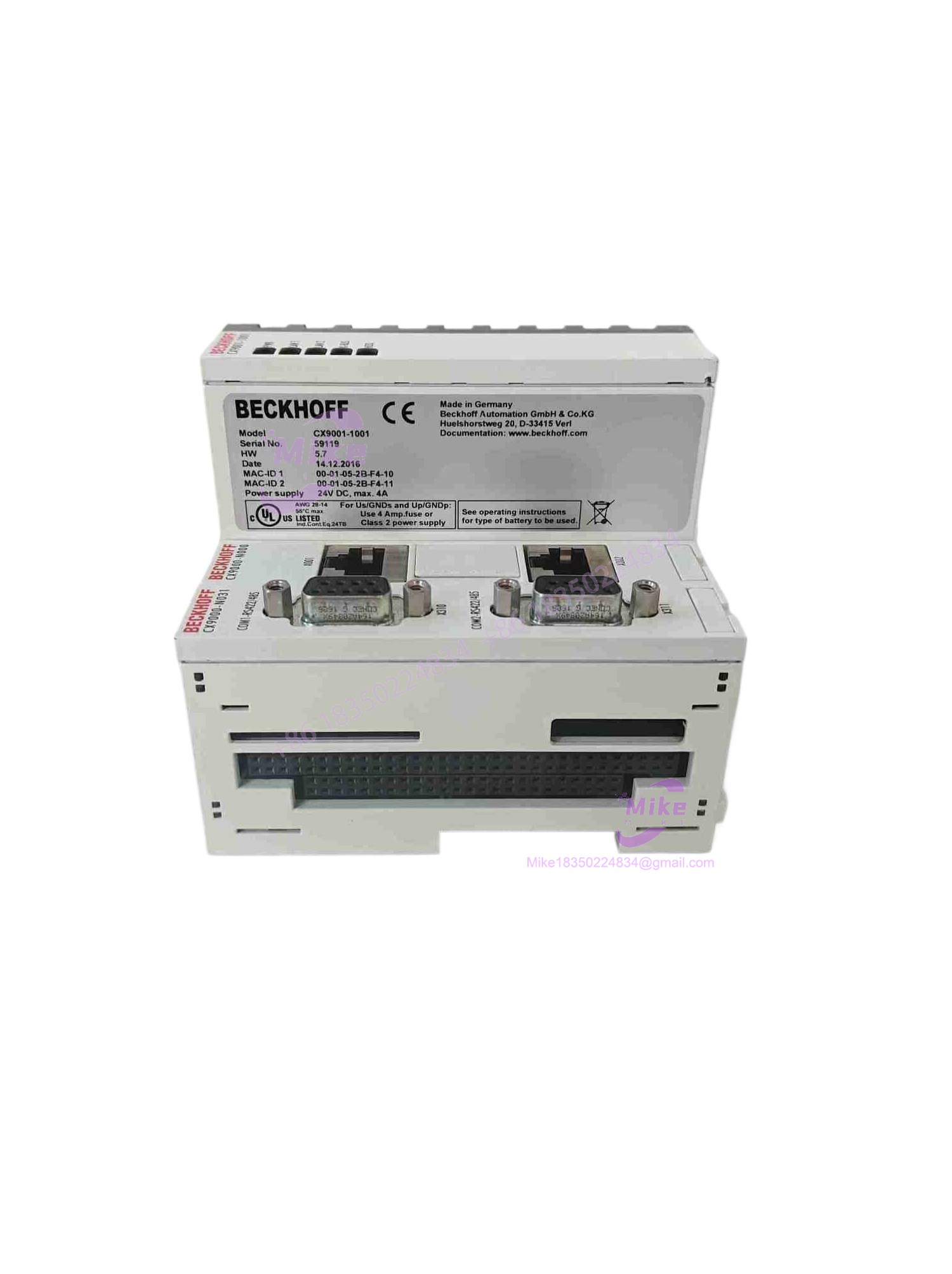
CX9001-1001
Key Technical Specifications
| Specification | Parameter Value |
| Processor Architecture | 32-bit ARM9 (fanless) |
| Operating System | Windows CE |
| Programming Environment | TwinCAT 2 / TwinCAT 3 (runtime dependent) |
| Flash Memory | Internal flash disk for boot media |
| System Interfaces | 2x RJ45 Ethernet (switched), DVI-D |
| I/O Connection | Direct E-bus terminal connection (automatic) |
| Power Supply | 24 VDC nominal system input |
| Operating Temperature | 0°C to 55°C industrial rating |
| Mounting Type | DIN-rail mountable compact profile |
| Enclosure Rating | IP20 panel housing |
Global Sourcing & Live-Test SOP (Transparency Core)
Sourcing secondary-market embedded controllers requires strict verification of network interfaces and internal memory integrity. For every inbound Beckhoff CX9001-1001 unit, our intake team records serial numbers against global OEM traceability logs and inspects the RJ45 and DVI connector pins for structural wear.
Once cleared, the controller is mounted on a live modular test rack with standard E-bus terminals. Technicians verify the 24VDC power rail stability with a Fluke multimeter, execute a complete network handshake test across both Ethernet ports, and run a 24-hour thermal soak test under full CPU load. The internal memory sectors are then wiped clean, and the unit is sealed in an anti-static moisture-barrier bag.
The Field Engineer’s Pitfall Guide
❗ Windows CE Boot Corruptions: Yanking the power cord without executing an orderly system shutdown can corrupt the internal flash bootloader. I’ve seen plant technicians waste hours troubleshooting a blank screen because an unexpected power cut fried the runtime registry.
❗ E-bus Terminal End Cap Omissions: Forgetting to attach the mandatory right-side terminal end cap on the I/O block will disrupt the internal signal loop. Always ensure physical E-bus termination is locked in place before energizing the system.
❗ Dual Ethernet Port Confusion: Misidentifying the switched Ethernet ports for independent subnet routing will break your network topology. Always verify your IP address assignments against the TwinCAT system configuration file.
Intent-Driven FAQ
- Will I lose my TwinCAT application code if I replace the Beckhoff CX9001-1001?
Project files reside on the internal flash or external storage media; always pull a fresh backup through TwinCAT before swapping hardware out of the panel.
- Is the CX9001-1001 pin-compatible with older K-bus terminal blocks?
No, this model is specifically engineered for high-speed E-bus terminals and cannot interface directly with legacy K-bus slices without an intervening coupler.
- What warranty is included with surplus units?
Verified inventory items come with a comprehensive 1-year functional warranty backed by our strict pre-shipment thermal and bus test logs.
- Can I run TwinCAT 3 on this specific controller model?
Compatibility depends heavily on the specific Windows CE image version and system memory footprint; verify your runtime license tier beforehand.
- How do I verify if a replacement unit has been factory refurbished?
Check for certified test verification tags, unble





