


Description
Applicom PCI1500S7 | PCI Siemens S7 Communication Interface Card
Product Introduction
When an older industrial supervisory computer needs to poll data from a factory floor full of Siemens S7 controllers without choking the host CPU, standard network interface cards fall short. The Applicom PCI1500S7 is not a generic PC networking card; it is an intelligent, co-processed communication accelerator engineered specifically to bridge standard PCs with industrial automation networks. Built with an onboard microprocessor to handle complex protocol framing, this hardware card unloads heavy network handshaking tasks from the host operating system.
Operating at the critical junction between legacy SCADA software and physical PLC racks, the unit guarantees low-latency data updates for demanding production environments—though your mileage may vary depending on the host PC’s PCI bus clock speed and operating system driver stability. It keeps critical data pipelines flowing reliably without forcing a premature, capital-intensive control system rip-and-replace.
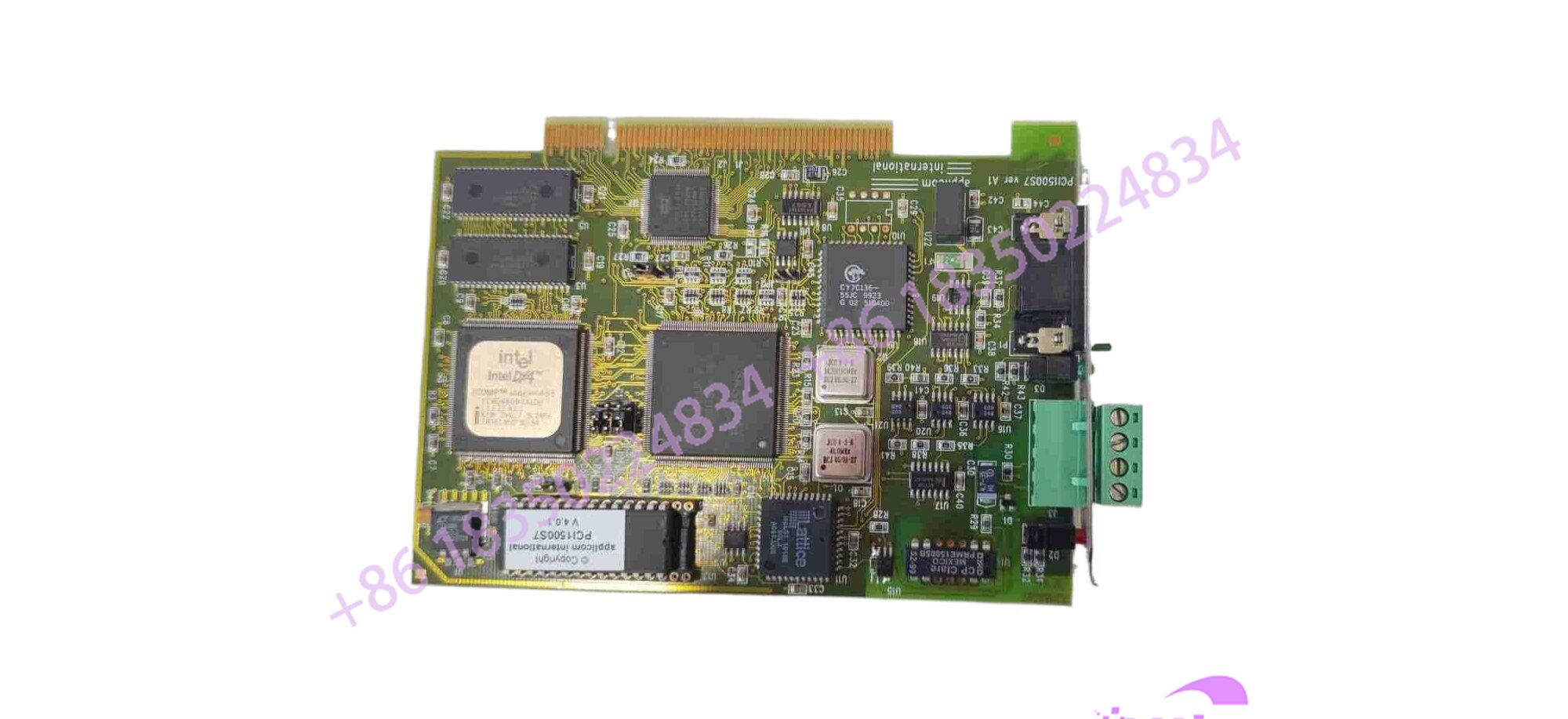
PCI1500S7
Key Technical Specifications
| Parameter | Specification |
| Manufacturer / Brand | Applicom (Molex / Schneider Electric ecosystem) |
| Model Designation | PCI1500S7 |
| Bus Architecture | Standard PCI 2.2 / 3.3V compatible expansion slot card |
| Target PLC Systems | Siemens SIMATIC S7 (MPI, Profibus DP, or S7-300/400 native interfaces) |
| Onboard Processing | Dedicated communication processor and RAM for local stack handling |
| Diagnostic Indicators | Multi-color onboard LED status lights for communication and error states |
| Software Support | Compatible with Applicom configuration software suites and standard OPC/DLL drivers |
| Operating Temperature | 0°C to 55°C industrial environment thresholds |
| Form Factor | Short-length standard PCI plug-in card profile |
Application Scenarios & Pain Points
- Automotive Body Shop SCADA Integration: An automotive plant in the Midwest suffered from frequent data packet drops and high CPU utilization on their central HMI server when polling multiple S7-400 controllers, which was completely resolved by installing the dedicated PCI1500S7 coprocessed card to offload protocol processing.
- Legacy Packaging Line Data Collection:
- Without PCI1500S7: Standard software-based drivers bogged down the PC kernel, leading to lagging HMI screens and intermittent timeouts during critical batch logging cycles.
- With PCI1500S7: The hardware-level co-processor manages message framing independently, ensuring instantaneous register updates to the host memory map.
- Harsh Industrial Control Room Enclosures: Housed inside rackmount industrial PCs subjected to continuous plant vibration, the card’s heavy-duty gold-plated edge connector and rigid bracket design maintain rock-solid bus seating.
QA & Live Testing SOP (Trust Signal)
Legacy industrial communication cards demand precise validation to guarantee they will integrate smoothly into older PC backplanes. Every unit we process undergoes strict functional verification:
- Visual & Component Inspection: Inspected under magnification for capacitor health, pristine gold PCI finger contacts, and zero evidence of physical solder stress or static damage.
- Test-Bench Insertion: Seated into a legacy industrial validation PC running a compatible Windows/DOS environment to verify BIOS enumeration and hardware resource assignment (IRQ/memory address mapping).
- Protocol Handshake Verification: Connected via a dedicated MPI/Profibus cable to a live Siemens S7 test rack, executing read/write polling sweeps to ensure the onboard co-processor handles telegrams cleanly.
- Driver & Software Communication Check: Validated using native Applicom configuration utilities to confirm error-free packet transmission across all target memory areas.
- Anti-Static Sealing: Shipped in thick dissipative shielding bags with custom-molded foam to protect the exposed PCB components from electrostatic discharge.
Field Engineer’s Pitfall Guide
- ❗ PCI Slot Voltage Mismatches: Ensure your industrial computer’s passive backplane or motherboard supports the correct PCI signaling voltage requirements. Forcing older 5V PCI cards into incompatible modern universal slots can instantly fry the bus interface.
- ❗ IRQ and Memory Address Conflicts: Because legacy PCI cards often require specific memory mapping windows, failing to reserve resources properly in the host BIOS can cause hard system crashes or driver initialization errors.
- ❗ Driver OS Limitations: Do not expect native, plug-and-play driver support for modern 64-bit operating systems like Windows 11. These cards require specific legacy OS environments or dedicated virtualized wrappers provided by the manufacturer.
Intent-Driven FAQ
Will the work with modern 64-bit Windows operating systems?
Generally, no. Native drivers for the were built for legacy 32-bit operating systems (such as Windows NT, 2000, XP, or specific embedded environments). Running them on modern OS architectures usually requires specialized virtualization or legacy driver shims.
What protocols does the S7 variant support out of the box?
The “S7” designation indicates specialized firmware and physical layer handling optimized for Siemens S7 environments, primarily communicating via MPI or Profibus protocols depending on how the Applicom configuration utility maps the node network.
Are these cards supplied as New Surplus or used working pulls?
We stock units in both factory-original New Surplus (NSMP) packaging and thoroughly tested, certified working pulls backed by a comprehensive hardware replacement warranty.
Does the card require an external power source besides the PCI slot?
No, all necessary operating power is drawn directly from the host PC’s PCI bus power rails (standard +5V/+3.3V pins), eliminating the need for awkward internal power jumper cables.





