

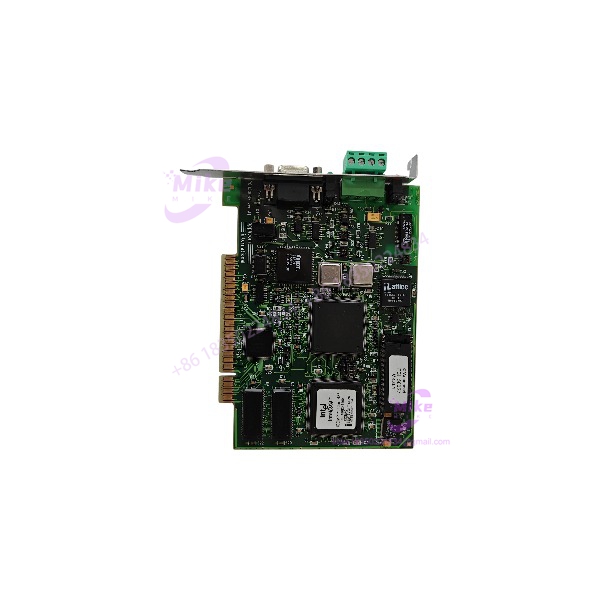
Description
Applicom PCI1500 S7 | PCI Fieldbus Communication Card Key Specs
Architect’s Product Breakdown
The Applicom PCI1500 S7 operates as a dedicated communication processor card within industrial PC environments, bridging standard desktop or rackmount computer architectures with Siemens SIMATIC S7 PLC networks. In SCADA, HMI, and data-logging applications where deterministic communication performance is critical, offloading protocol stacks—such as MPI, Profibus DP, or S-Bus—onto an onboard dedicated microprocessor prevents host OS CPU bottlenecks. This hardware model handles low-level telegram framing and error checking autonomously, ensuring stable data exchange across the industrial network.
Integrating or replacing this communication card in an industrial PC requires careful attention to PCI slot compatibility, driver configuration, and memory address window allocations. When performing maintenance swaps during system retrofits, engineers must ensure that the associated Applicom driver software version matches the operating system architecture and that node addressing parameters mirror the legacy configuration. Omitting proper shielding practices on the network drop cable or failing to configure correct bus termination parameters can introduce transmission errors and cause cyclic communication timeouts.
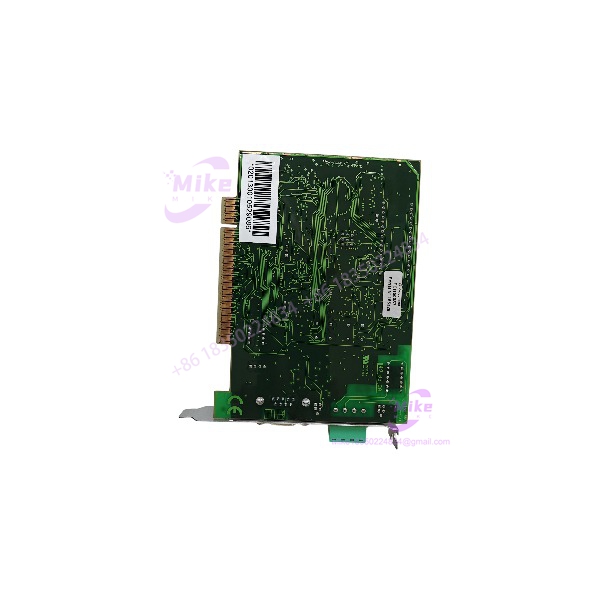
PCI1500 S7
Key Technical Specifications
- Manufacturer: Applicom (Molex / Woodhead Industries)
- Product Category: PCI Fieldbus Communication Board
- Part Number / Catalog No.: PCI1500 S7
- Bus Architecture: Standard PCI master/slave interface
- Supported Protocols: Siemens SIMATIC S7 (MPI, Profibus DP, S-Bus)
- Onboard Processing: Dedicated microprocessor and dual-port RAM for protocol handling
- Network Connectors: Standard industrial D-Sub physical interface ports
- Operating Temperature Range: 0°C to +55°C (standard industrial threshold)
- Relative Humidity Limit: 10% to 85% (non-condensing)
- Enclosure Compatibility: Standard industrial PC PCI expansion slot
- Weight: Approximately 0.3 kg to 0.5 kg
Field Engineer’s Pitfall Guide (Unique Value)
- Hot-Swapping Under Power: Never insert or remove the PCI1500 S7 card while the host industrial PC is powered on. Doing so risks shorting live PCI bus power rails and permanently damaging motherboard components.
- Driver and OS Version Mismatches: Upgrading the host industrial computer’s operating system without verifying Applicom driver compatibility will break communication pipes, resulting in total data loss between the HMI/SCADA package and the PLC network.
- Neglecting Bus Termination and Biasing: Failing to install proper active termination resistors at the physical ends of the Profibus or MPI network trunk will cause signal reflections, leading to random packet drops and node disconnections.
QA & Testing SOP (Transparency)
- Visual & Origin Verification: Units undergo microscopic examination to verify clean gold-finger connectors, undamaged surface-mount components, and authentic OEM labeling.
- Live Test Bench Environment: Communication cards are seated in a dedicated industrial PC test fixture running validated operating systems and diagnostic software to evaluate bus stability.
- Network Polling & Handshake Testing: Technicians execute multi-node read/write polling loops connected to a live Siemens S7 PLC test rack to confirm zero packet loss and protocol stack integrity.
- Anti-Static Packaging: Post-testing units are sealed inside conductive ESD shielding bags and cushioned with high-density foam inserts to prevent electrostatic discharge during transit.
Technical FAQ
Can I hot-swap the PCI1500 S7 communication card while the industrial PC is energized? No. Standard PCI expansion slots do not support live hot-swapping. Always power down the host computer entirely before installing or removing this module.
Which control systems and networks are compatible with this specific card variant? The “S7” designation indicates native hardware and firmware support for Siemens SIMATIC S7 environments, communicating via protocols such as MPI and Profibus DP.
What causes initialization errors or communication failures upon booting the host PC? Initialization errors are typically caused by an unseated PCI edge connector, conflicting memory address or interrupt (IRQ) assignments in the BIOS, or outdated driver versions.
What is the standard warranty status for surplus inventory units? Verified surplus or factory-sealed communication cards typically carry a 12-month operational warranty covering material and manufacturing defects under normal industrial conditions.





