


Description
ALCATEL FA111 | Penning Cold-Cathode Vacuum Gauge
Product Introduction
A vacuum gauge is only useful when its measurement technology matches the pressure regime. ALCATEL FA111 is a legacy Alcatel Penning-type cold-cathode vacuum measurement unit intended for high-vacuum applications where a conventional mechanical pressure sensor is no longer suitable.
Independent technical documentation specifically records an Alcatel FA111 Penning gauge operating over approximately 10⁻² to 10⁻⁷ mbar. In one documented vacuum-analysis installation, the FA111 was paired with MKS Baratron gauges and an Alcatel ATP80 turbomolecular pump, placing the FA111 clearly within a high-vacuum instrumentation chain rather than a conventional PLC or Ethernet architecture.
The FA111 designation should therefore be treated carefully during procurement. Several reseller pages currently attach unrelated networking or vacuum-controller specifications to this model, but those descriptions conflict with independent technical references identifying as a Penning vacuum gauge.
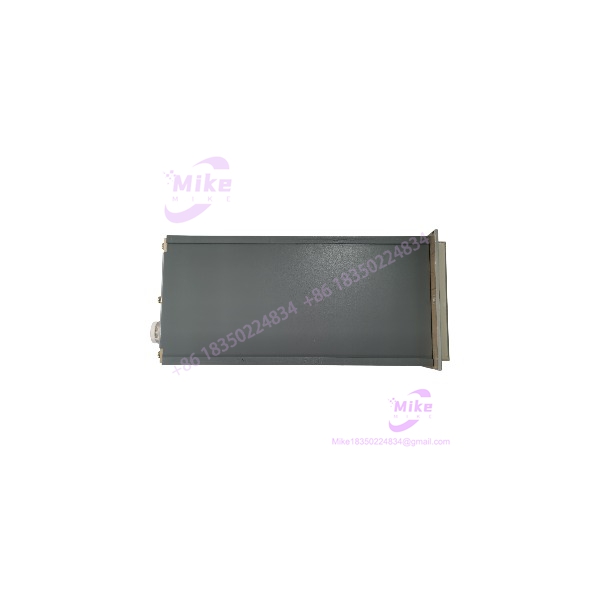
FA111
Key Technical Specifications
- Manufacturer: Alcatel Vacuum
- Model:
- Instrument Type: Penning cold-cathode vacuum gauge
- Measurement Principle: Cold-cathode ionization / Penning discharge
- Documented Pressure Range: Approximately 10⁻² to 10⁻⁷ mbar
- Typical Pressure Regime: High vacuum
- Associated Gauge: Alcatel CF2P is documented with installations
- Vacuum-System Role: Vacuum pressure indication / measurement
- Typical Pumping System: Can be integrated with turbomolecular-pump systems
- Typical Application: Vacuum analysis, laboratory vacuum systems, scientific instrumentation, and industrial high-vacuum equipment
- Filament: No heated filament is required for Penning cold-cathode operation
- Control-System Integration: Must be determined from the specific hardware revision and installation documentation
- Lifecycle: Legacy Alcatel equipment; exact current OEM availability should be verified before specifying as a new-build component
The pressure range above is based on independent documentation that explicitly identifies as a Penning gauge. One source gives 10⁻²–10⁻⁷ mbar, while another describes the gauge as operating from 10⁻² to 10⁻⁷ mbar in an experimental vacuum station.
Vacuum-System Application
The belongs in the instrumentation layer of a vacuum system.
A typical architecture can include:
- Vacuum chamber or process vessel
- Primary/backing pump
- Turbomolecular pump
- Mechanical pressure gauge
- MKS Baratron capacitance manometer
- Alcatel Penning gauge
- Associated CF2P sensing head
- Vacuum-control electronics
- PLC, DCS, or laboratory control system
The becomes useful once the pressure moves beyond the practical range of many conventional mechanical gauges. Cold-cathode ionization measurement uses an electrical discharge in the residual gas; the resulting ionization current is related to gas pressure.
That operating principle is fundamentally different from a capacitance manometer. A Baratron measures pressure mechanically through diaphragm deflection, whereas a Penning gauge derives pressure from discharge behavior. For process engineers, that distinction matters when evaluating gas composition, calibration, ignition behavior, and measurement stability.
Global Sourcing & Live-Test SOP
1. Inbound Verification
For a surplus , photograph the complete nameplate before energizing the equipment.
Record:
- Model designation
- Serial number
- Hardware/revision information
- Supply-voltage marking
- Connector configuration
- Associated gauge-head identification
- Overall mechanical condition
Do not accept a listing that identifies merely as a generic “vacuum controller” without confirming the physical unit.
2. Vacuum-System Verification
A proper functional test should use a controlled vacuum test station.
Recommended procedure:
- Inspect the electrical connector and gauge cable.
- Inspect the associated Penning gauge/head.
- Check insulation and wiring before energization.
- Establish a controlled vacuum environment.
- Verify the gauge can initiate its discharge within the specified operating region.
- Compare the indicated pressure against a calibrated reference gauge.
- Check behavior while pressure is reduced through the usable measurement range.
- Verify stable readings at representative pressure points.
- Record pressure indication, supply conditions, and gauge-head configuration.
Do not judge an solely by powering it on at atmospheric pressure. A Penning gauge is a vacuum-dependent measurement device; functional verification requires the appropriate pressure conditions.
3. Cross-Check Against Reference Instrumentation
Where possible, compare readings with a calibrated capacitance manometer or another traceable reference instrument.
The comparison should account for:
- Gas composition
- Pressure range
- Gauge-head condition
- Pumping configuration
- Outgassing
- Electrical discharge behavior
- Calibration history
This is particularly important with older vacuum instrumentation because a functioning display or control circuit does not automatically prove measurement accuracy.
4. Final Preparation
After inspection/testing:
- Keep the gauge and connectors clean.
- Protect vacuum-system connectors from contamination.
- Use ESD-safe packaging for the electronic unit.
- Protect the instrument from mechanical shock.
- Record serial number and revision information.
- Package any associated gauge head separately where practical.
- Preserve original labels for traceability.
Field Engineer’s Pitfall Guide
❗ Do not confuse with a conventional pressure transmitter.
The is documented as a Penning cold-cathode vacuum gauge. Its measurement principle depends on ionization discharge behavior, so installation and interpretation differ from a 4–20 mA pressure transmitter or MKS Baratron.
❗ Do not assume the published pressure range applies identically to every configuration.
The documented references show approximately 10⁻² to 10⁻⁷ mbar operation, but the actual usable range depends on the associated sensing head and system configuration. Confirm the exact gauge-head model before writing a hard specification into a purchase order.
❗ Be careful with conflicting reseller specifications.
Some current reseller pages describe as a 10/100 Mbps PCI network interface or as a modern digital vacuum controller. Those descriptions conflict with independent technical literature identifying the as a Penning vacuum gauge. For procurement, the physical nameplate, gauge-head compatibility, and original technical documentation should take precedence.
Intent-Driven FAQ
Q1. What is the ALCATEL ?
The ALCATEL is a legacy Penning cold-cathode vacuum gauge / vacuum measurement unit used for high-vacuum pressure measurement.
Q2. What pressure range does the measure?
Independent technical references document approximately 10⁻² to 10⁻⁷ mbar for the Penning gauge configuration.
Q3. Is a PLC or Ethernet communication module?
No. The stronger technical evidence identifies it as vacuum instrumentation. Descriptions calling a Fast Ethernet PCI card should be treated as suspect because they conflict with independent references and the established Alcatel vacuum context.
Q4. What gauge is associated with the ?
The Alcatel CF2P is specifically documented in vacuum installations using the Penning gauge system.
Q5. Can be used with a turbomolecular pump?
Yes, the documented application environment includes an Alcatel ATP80 turbomolecular pump operating as part of the same vacuum-analysis system. This establishes that can form part of a turbomolecular-pump-based high-vacuum measurement chain.
Q6. Is the still a current Alcatel product?
It should be treated as legacy equipment for procurement purposes. Before specifying it for a new system, verify the exact revision, associated gauge head, service documentation, and availability of replacement units.
Q7. What should be verified before purchasing a used ?
Verify the nameplate, serial/revision information, gauge-head compatibility, electrical condition, connector condition, and operation under controlled vacuum. Most importantly, confirm that the supplied item is actually the Penning vacuum-gauge hardware rather than a reseller’s incorrectly labeled product.





