Description
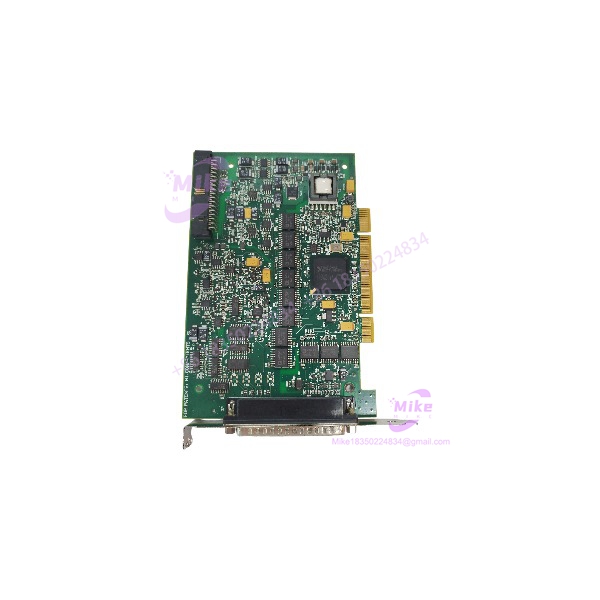
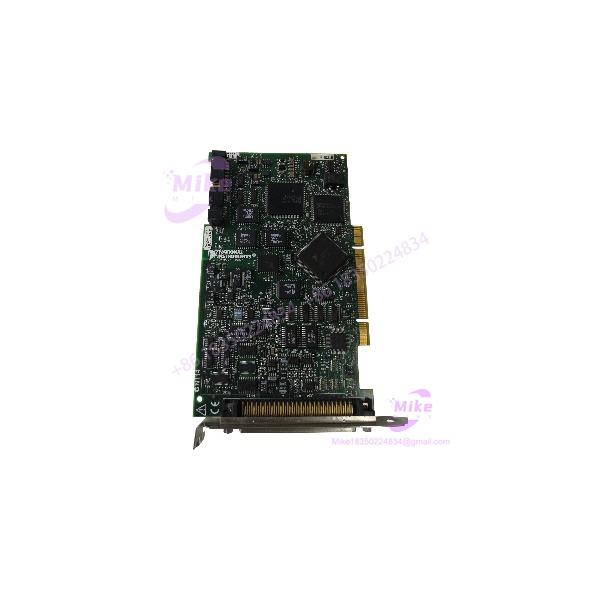
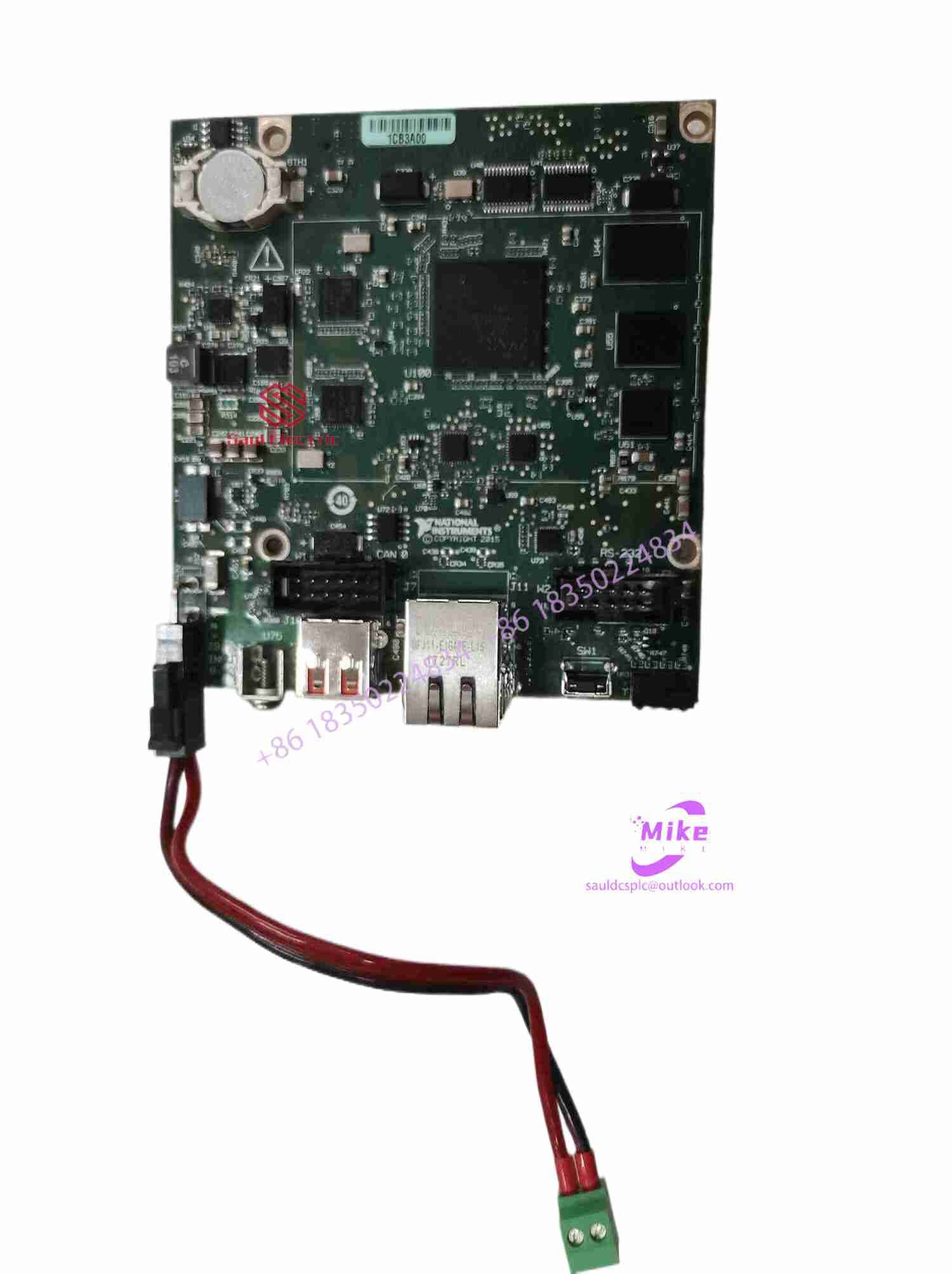
NI SBRIO-9607 Acquisition card
NI sbRIO-9607 is a high-performance embedded single-board controller launched by National Instruments of the United States, belonging to the NI CompactRIO product family. It integrates a real-time processor, a reconfigurable FPGA, and rich I/O interfaces on a single printed circuit board, specifically designed for high-volume OEM applications and embedded control systems requiring high flexibility, high reliability, and high performance. The controller integrates seamlessly with the CompactRIO series products, driven by NI CompactRIO Device Drivers, and is widely applied in fields such as high-speed control loops, online signal processing, hardware-in-the-loop simulation HIL, rapid control prototyping, and distributed measurement and control.
NI SBRIO-9607 Acquisition card
Regarding core architecture, the sbRIO-9607 is based on the Xilinx Zynq-7000 all-programmable system-on-chip SoC, specifically the XC7Z020 model. This chip integrates a dual-core ARM Cortex-A9 processor running at 667 megahertz, responsible for running the NI Linux Real-Time 32-bit real-time operating system to ensure reliable execution of real-time tasks. The chip also embeds a user-reconfigurable FPGA with 53,200 look-up tables LUTs and 220 DSP slices, supporting digital I/O switching frequencies up to 10 megahertz, enabling high-speed parallel signal processing and custom hardware logic. The system is equipped with 512MB non-volatile storage and 512MB DDR volatile memory, with a real-time clock accuracy of 5 parts per million and flash restart endurance of 100,000 cycles.
Regarding I/O interfaces, the most prominent feature of the sbRIO-9607 is its onboard RIO Mezzanine Card, known as the RMC connector. This is a high-density, high-throughput connector providing 96 channels of 3.3-volt single-ended digital I/O lines, all directly connected to the FPGA, enabling extremely low-latency signal acquisition and output. Through the RMC connector, users can expand up to two additional C Series modules and other peripheral devices, allowing flexible customization of analog I/O, digital I/O, communication interfaces, and signal conditioning functions. The onboard digital I/O also supports multi-channel serial communication implemented through the FPGA, including 1 onboard RS-232 serial port as well as 4 RMC RS-232 serial ports and 2 RMC RS-485 serial ports provided through the FPGA. The RS-232 serial port supports a maximum baud rate of 230,400 bps, and the RS-485 serial port supports a maximum baud rate of 460,800 bps, with support for multiple data bit, stop bit, parity, and flow control modes. In addition, the controller integrates 1 CAN bus interface, 1 USB host port, and 2 Gigabit Ethernet ports, where both the front panel Ethernet port Eth0 and the RMC Ethernet port Eth1 support 10Base-T, 100Base-TX, and 1000Base-T adaptive communication, with a maximum cable distance of 100 meters per segment.
Regarding power supply and environmental adaptability, the sbRIO-9607 supports a wide input voltage range of 9 volts DC to 30 volts DC, with a recommended power adapter of 55 watts within 30 volts DC. The onboard power regulator provides three outputs, including a 5V 1.5A main output, a 3.3V 0.33A auxiliary output, and a 3.3V 0.33A FPGA I/O output, with maximum ripple and noise controlled within 50 millivolts. The maximum power consumption when used with RMC is 28 watts. The controller operating temperature range is minus 40 degrees Celsius to plus 85 degrees Celsius, with the same storage temperature range. The operating humidity is 10 percent to 90 percent non-condensing, and the maximum operating altitude is 5,000 meters. It is for indoor use only. The total weight is approximately 87 grams, with a compact structure that facilitates embedding into various equipment.
Regarding the software ecosystem, the sbRIO-9607 supports the LabVIEW 2015 development environment. Combined with the LabVIEW FPGA module, it enables the development, debugging, and deployment of custom hardware logic. Combined with the LabVIEW Real-Time module, it allows the creation and deployment of real-time distributed system applications for testing, monitoring, and control. Users can select from hundreds of pre-written LabVIEW libraries and hardware APIs to achieve deterministic data acquisition. The controller also features a built-in SD card expansion slot supporting system boot from SD card, and is equipped with onboard LED status indicators and a reset switch for easy on-site commissioning.
In typical application scenarios, the sbRIO-9607 is widely deployed in automated test systems, machine vision, robotics control, power electronics prototyping, aerospace embedded systems, and industrial IoT edge computing. Thanks to its heterogeneous architecture of FPGA and real-time processor, users can implement high-speed data acquisition and signal processing in the FPGA while running advanced control algorithms and communication protocols on the real-time processor, achieving a full-chain closed loop from sensor data acquisition to actuator control. Compared with traditional PLCs or pure software solutions, the sbRIO-9607 provides higher parallel processing capability and lower control latency, helping users upgrade from traditional control architectures to high-performance FPGA-based embedded control architectures, significantly improving system response speed and reliability.
Related products in the same series include the sbRIO-9627 and other models. The sbRIO-9627 differs in I/O configuration but shares the same core processing platform. With its compact form factor, powerful FPGA processing capability, rich communication interfaces, and comprehensive RMC expansion ecosystem, the sbRIO-9607 serves as an ideal choice in the NI embedded control product line for medium-to-high-performance applications.