Description
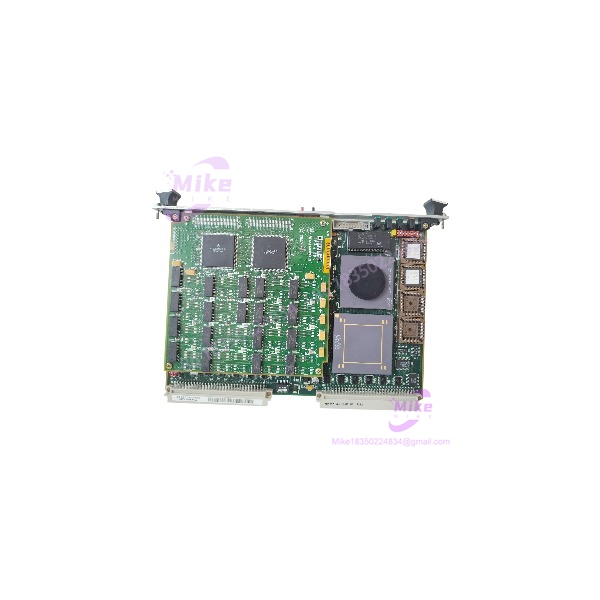
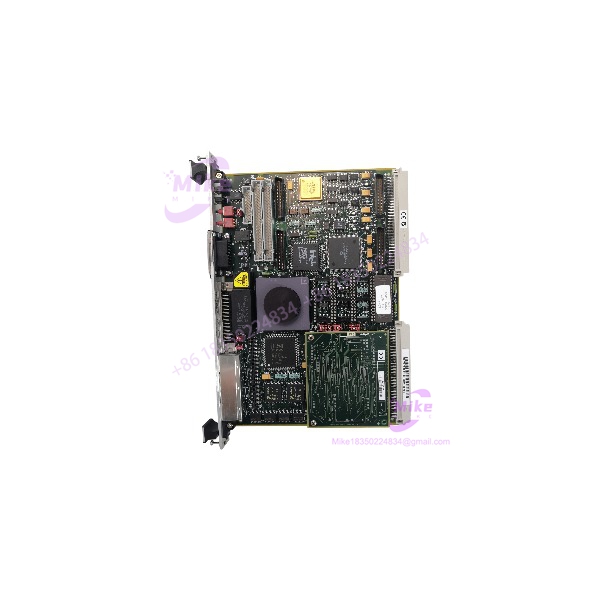
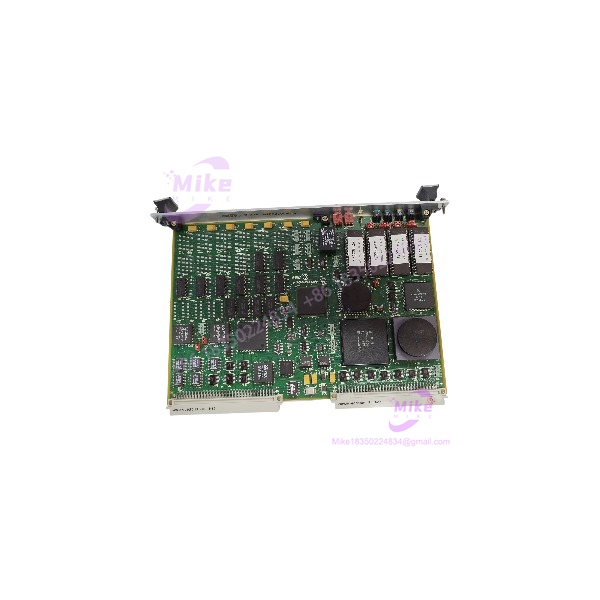
Motorola MVME61006E-0163R | VME Single-Board Computer
Dynamic Product Introduction
A legacy VME computer can become a plant-level bottleneck when the original processor board fails and the application cannot be migrated without extensive software requalification. The MVME61006E-0163R addresses that problem by providing a PowerPC-based computing platform for existing VMEbus architectures, allowing maintenance teams to preserve established hardware and software interfaces rather than immediately redesigning the entire system.
Built around the 1.267 GHz MPC7457 processor, this board combines 512 MB of DDR memory, 128 MB of onboard flash, dual Gigabit Ethernet interfaces, and two PMC expansion sites. Its VMEbus interface supports advanced transfer modes, including 2eSST, with a documented theoretical transfer rate of up to 320 MB/s under supported operating conditions. Actual throughput depends on the chassis, bus configuration, installed modules, and software workload; that figure should not be treated as a guaranteed application-level data rate.
For replacement projects, the most important advantage is architectural continuity. Existing PowerPC software, VMEbus peripherals, and application-specific PMC cards may be reusable, subject to operating-system, firmware, driver, and electrical compatibility checks. This is a legacy-platform maintenance solution, not a drop-in modernization to a contemporary x86 or ARM controller.
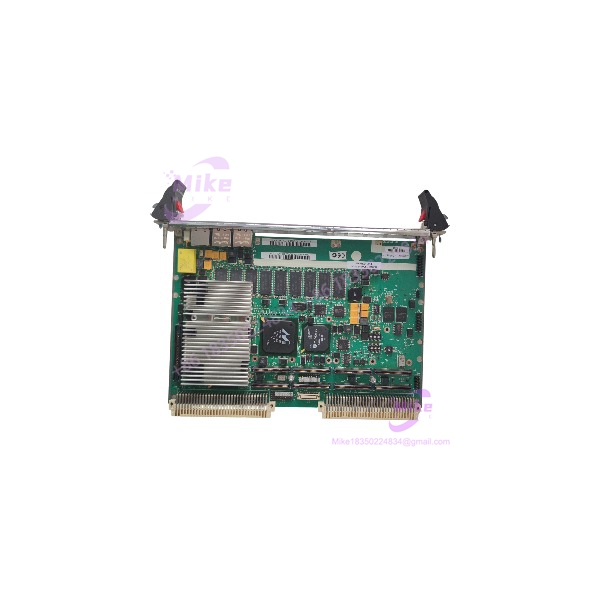
MVME61006E-0163R
Key Technical Specifications
- Manufacturer: Motorola Embedded Computing / Emerson / Artesyn lineage.
- Product family: MVME6100.
- Part number: MVME61006E-0163R.
- Processor: MPC7457 PowerPC, operating at 1.267 GHz.
- Onboard memory: 512 MB DDR SDRAM.
- Flash storage: 128 MB, arranged in two 64 MB banks.
- System controller: Marvell MV64360.
- VMEbus bridge: Tundra Tsi148.
- VMEbus compatibility: VME64 and VME64 extensions; supports 2eSST under compatible backplane conditions.
- Ethernet: Two Gigabit Ethernet interfaces, with routing dependent on board configuration.
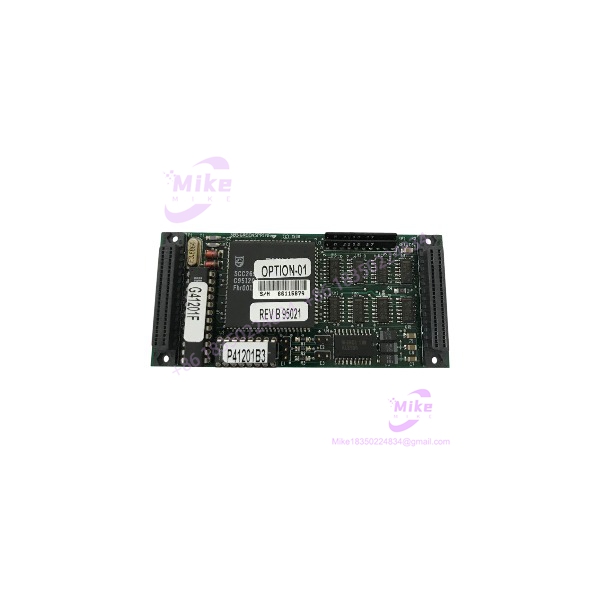
- Expansion: Two PMC sites supporting compatible mezzanine modules.
- Serial interfaces: Two asynchronous serial ports.
- Front-panel configuration: IEEE-style ejector handles.
- Firmware environment: MOTLoad.
- Operating environment: Published standard operating conditions specify 0°C to +55°C inlet air temperature with forced-air cooling.
These specifications describe the documented 0163R configuration. Verify the board label and revision before ordering, particularly if the existing unit has been modified or repaired.
Global Sourcing & Live-Test SOP
For an obsolete embedded computer, a seller’s description alone is insufficient evidence of operational condition. The following acceptance procedure is recommended for MVME61006E-0163R procurement. It describes the verification process that should be performed; it does not imply that a particular inventory unit has already passed these tests.
Inbound verification
- Match the physical board label to MVME61006E-0163R and record the serial number, assembly markings, and hardware revision.
- Inspect component condition, solder joints, connectors, ejector handles, and evidence of corrosion, overheating, or rework.
- Review available chain-of-custody records, supplier documentation, and original packaging where available. Treat OEM paperwork as supporting evidence, not conclusive proof of authenticity.
- Confirm the specified 512 MB memory configuration and 128 MB flash capacity against the unit’s identification and diagnostic results.
Powered testing and diagnostics
- Install the board in a compatible VME chassis with the correct backplane and cooling arrangement.
- Monitor the startup sequence through the serial console and record MOTLoad identification, firmware version, memory detection, and boot behavior.
- Run the available onboard diagnostics to exercise the processor, memory, Ethernet controllers, serial interfaces, flash banks, and VMEbus bridge.
- Validate Gigabit Ethernet connectivity and test VMEbus transactions using a compatible test controller and representative peripheral hardware.
- Exercise each installed PMC module separately, checking PCI enumeration, power compatibility, and application-level communication.
- Where practical, conduct a 24-hour powered thermal soak under representative operating conditions. Record any resets, diagnostic failures, or unexpected temperature changes.
A Fluke multimeter can help verify chassis supply rails and continuity where appropriate, but it cannot establish correct processor execution or full VMEbus functionality by itself.
Final preparation and shipment
- Record the board serial number, firmware version, test results, and any known limitations.
- Photograph the tested unit and its identifying label so the shipped board can be matched to the acceptance record.
- Apply ESD-safe packaging and protect the connectors and front panel during transport.
- State the actual condition clearly: new old stock, refurbished, repaired, or used-tested. Do not describe a unit as factory sealed unless its condition supports that claim.
Procurement recommendation: Request a written test report and warranty terms before placing an order. Stock availability, factory-sealed status, and test history must be confirmed for the specific unit; none should be assumed from the model number alone.
The Field Engineer’s Pitfall Guide
❗ Warning 1: Firmware and boot-environment mismatches
The MVME61006E-0163R uses MOTLoad, and its boot environment can contain settings for boot devices, VME address windows, and startup behavior. A replacement may pass basic diagnostics yet fail to start the original application if the boot configuration, operating-system image, or application dependencies differ.
Before removing the old board, capture its firmware identification, environment variables, boot media details, and relevant VME configuration. Avoid assuming that a firmware upgrade or downgrade is harmless; validate the target image and recovery procedure first.
❗ Warning 2: Jumper settings and transition-module routing
The board’s jumpers affect PMC/IPMC selection and Ethernet routing. A replacement with different settings may appear to have failed networking or peripheral hardware when the real issue is configuration.
I’ve seen troubleshooting time disappear into cable swaps when the underlying problem was a configuration mismatch. Photograph the original jumper positions and compare them against the installation documentation before changing anything. Pay particular attention to the J30 routing configuration and the settings associated with the PMC sites.
❗ Warning 3: Backplane compatibility and unsafe removal
The MVME61006E-0163R relies on the VMEbus backplane for power and communication. A five-row VME64x-compatible backplane is required for the documented 2eSST operating capability; a three-row backplane does not support those transfers. Confirm the chassis architecture, connector arrangement, slot configuration, and cooling before installation.
Do not treat the board as a routine hot-swappable PLC module. Follow the chassis and system manufacturer’s approved shutdown and removal procedure. If the existing system uses custom P2 wiring, transition modules, or application-specific PMC cards, verify the entire interface chain before energizing the replacement.
Intent-Driven FAQ
Q1. Will the MVME61006E-0163R work as a direct replacement for my existing MVME6100 board?
Possibly, but confirm the complete part number, hardware revision, memory configuration, front-panel hardware, firmware, and installed expansion cards. Similar model numbers can represent different configurations. The suffix 0163R identifies the IEEE-handle, 512 MB memory configuration; a mechanically similar board is not automatically equivalent in every respect.
Q2. Can I install the board without losing my existing application software?
Replacing the physical board does not inherently erase software stored on separate boot media or another system component. However, the replacement’s onboard flash contains its own firmware and may not contain your application image or configuration.
Back up boot media, application files, firmware settings, and VME configuration before the swap. Confirm whether the application depends on board-specific device addresses, serial settings, Ethernet configuration, or firmware behavior.
Q3. Is the MVME61006E-0163R still available as new OEM stock?
Availability is inventory-dependent. Legacy boards may appear as new old stock, used-tested, refurbished, or repaired units, and these conditions are not interchangeable. Confirm physical stock, traceability, actual board condition, and the seller’s return policy before issuing a purchase order. No live inventory guarantee is implied here.
Q4. Can I downgrade MOTLoad if the replacement board has a different firmware version?
A downgrade may be possible, depending on the board revision, available firmware image, flash layout, and supported recovery procedure. First verify the target version and compatibility with the installed hardware and application. Preserve a recoverable backup and avoid rewriting flash until the correct image and recovery method have been established.
Q5. Does the MVME61006E-0163R support hot swapping?
Do not assume that it does. Treat replacement as a controlled maintenance operation unless the complete system documentation explicitly authorizes live removal under the installed configuration. Follow the approved shutdown sequence and confirm that removing the processor board will not disrupt other active VMEbus devices.
Q6. What warranty should I expect when purchasing a replacement?
Warranty coverage depends on the seller and the specific unit’s condition. Ask for the warranty duration, whether coverage includes functional failure or only arrival condition, the return authorization procedure, and who pays return freight. For refurbished equipment, request written confirmation of the tests performed and any exclusions for unsupported peripherals or customer modifications.
Q7. What should I verify before ordering an MVME61006E-0163R internationally?
Confirm the exact model, serial number, memory and flash configuration, physical condition, and included accessories. Obtain a written quotation specifying currency, shipping terms, lead time, packaging, warranty, and the procedure for reporting transit damage or a failed incoming test. For cross-border shipments, also verify the import classification and any applicable export restrictions for the equipment’s intended use.
Final procurement assessment: The MVME61006E-0163R is a specialized legacy VME computing board suited to maintaining compatible embedded systems. Its 1.267 GHz PowerPC processor, 512 MB memory configuration, and VMEbus expansion capabilities make it a candidate for like-for-like replacement, provided the hardware, firmware, chassis, and application environment are verified before installation.