

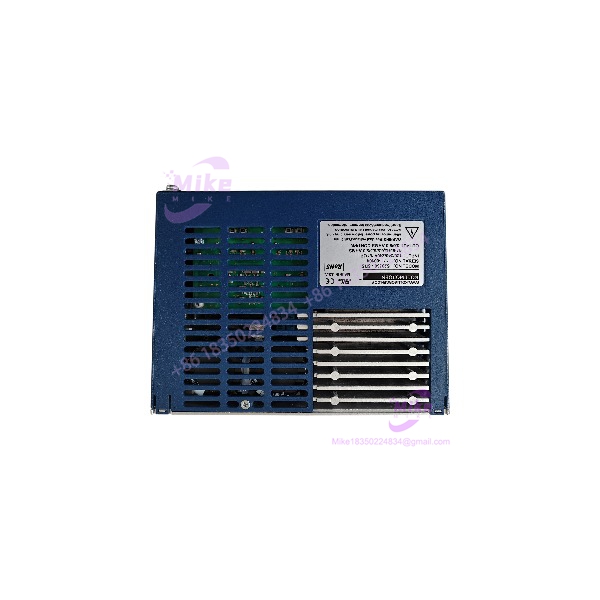
Description
Kollmorgen S20360-SRS | 3A / 18A 120/240V AC Servo Amplifier | Sealed
Dynamic Product Introduction
High-speed indexing, rapid pick-and-place robotics, and aggressive duty-cycle axes require servo drives capable of delivering high peak current multipliers without triggering thermal or over-current faults. The Kollmorgen S20360-SRS serves as a high-peak-current digital servo amplifier engineered specifically for the S200 compact drive platform with SynqNet motion network integration. Sourcing an exact-spec S20360-SRS drive ensures complete parameter retention, exact pinout compatibility, and immediate network ring synchronization without requiring panel structural modifications or motion controller re-programming.
Designed for demanding automation machinery, packaging systems, and semiconductor processing lines, the Kollmorgen S20360-SRS provides an 18.0 A RMS peak current output (a 6x peak multiplier over its 3.0 A continuous base rating). Its SynqNet digital network interface delivers real-time deterministic motion commands over optical/copper motion rings, shielding real-time control telemetry from heavy industrial electromagnetic noise. For motion control technicians and electrical maintenance personnel servicing critical Kollmorgen drive networks, installing a fully load-tested replacement drive guarantees steady motor control and maximum production throughput.
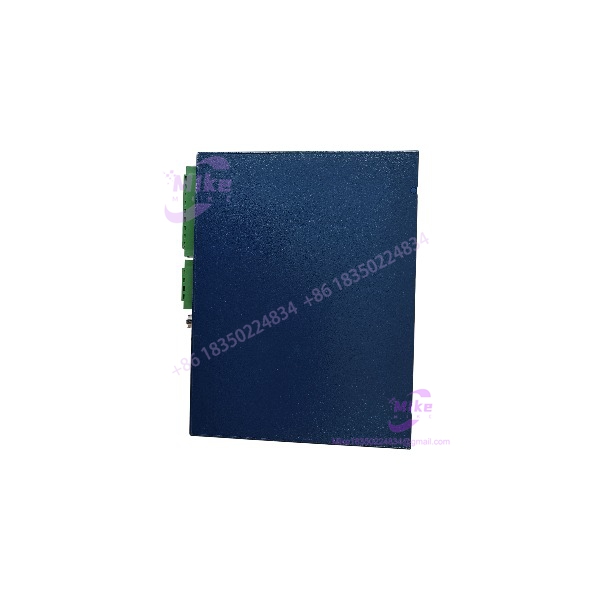
S20360-SRS
Key Technical Specifications
- Model Identification: Kollmorgen S20360-SRS
- Drive Platform: S200 Compact Digital Servo Drive Series
- Input Power Rating: 120/240 V AC Nominal Single-Phase (85 V AC to 265 V AC operational range, 47–63 Hz)
- Continuous Output Current: 3.0 A RMS per phase
- Peak Output Current: 18.0 A RMS (High peak multiplier for rapid transient acceleration)
- Motion Network Interface: SynqNet Digital Motion Bus (Interface Option “SRS”)
- Motor Feedback Support: Smart Feedback Device (SFD), Sine/Cosine Encoders, High-Resolution Resolvers
- Protection Features: Overvoltage, Undervoltage, Output Short Circuit (phase-to-phase / phase-to-ground), Motor Over-Temperature, Drive I²t Thermal Limiting
- Operating Temperature Range: 0°C to +45°C (32°F to +113°F)
Global Sourcing & Live-Test SOP (Transparency Core)
To guarantee 100% out-of-the-box performance prior to field installation, every reconditioned or factory-surplus Kollmorgen servo drive undergoes a strict 5-stage physical and electrical diagnostic testing protocol before dispatch:
- Inbound Visual & Structural Inspection: Microscopic check of high-current power terminal blocks, internal DC bus capacitor inspection for ESR degradation, verification of heatsink clean state, and validation of model code S20360-SRS.
- Power Stage & DC Bus Test: Single-phase AC power is energized to verify internal DC bus voltage generation and confirm soft-start inrush current limiter operation (Verification: 320 V DC bus nominal generated under 240 V AC input).
- Live Servo Loop & High-Peak Dynamometer Test: The drive is coupled to a Kollmorgen AKM servomotor on a load bench, executing high-transient acceleration SynqNet trajectories (Verification: Smooth current regulation across 100% rated continuous 3.0 A and high-peak 18.0 A acceleration cycles).
- Environmental Thermal Burn-In: The unit undergoes an 18-hour continuous burn-in cycle at 40°C inside an environmental chamber while running continuous thermal load cycles.
- Final Prep: Power and feedback terminals receive anti-corrosion spray treatment, drive parameters are reset to baseline factory configurations, and the unit is packaged in static-shielded ESD protective packaging.
The Field Engineer’s Pitfall Guide
Stored High Voltage DC Bus Hazard
Hazardous DC bus voltages (up to 400 V DC) remain present across internal drive capacitors for several minutes after AC input power is disconnected. Always verify the front-panel DC Bus LED is fully extinguished and test DC bus terminals with a multimeter before touching power connections.
❗ Confusing S20360 (18A Peak) with S20330 (9A Peak) Hardware: Substituting an S20330 unit where an S20360 is required will cause premature I²t thermal tripping during high-acceleration acceleration phases due to lower peak current limits. Always verify the full part code before mounting.
❗ Incorrect SynqNet Network Port Cable Order: Reversing the SynqNet IN and OUT network port connections on the S20360-SRS breaks the deterministic network ring, causing the main motion controller to trigger a ring fault. Always trace and match network cable sequencing before applying power.
❗ Un-grounded Motor Power Cable Shielding: Running motor power leads without a 360-degree shield clamp secured directly to the drive grounding bracket allows high-frequency PWM switching noise to couple onto feedback wires, triggering false SFD encoder faults. —In field deployments, I’ve seen a multi-axis packaging cell trip repeatedly simply because a shield clamp was left loose after a motor swap.
Intent-Driven FAQ
What is the continuous and peak current output rating of the Kollmorgen S20360-SRS?
The S20360-SRS provides 3.0 A RMS continuous output current per phase and up to 18.0 A RMS peak output current for high-transient acceleration cycles.
What does the “SRS” designation represent on the S20360-SRS model number?
The “SRS” designation indicates that the drive features the SynqNet motion network interface board and supports Smart Feedback Device (SFD) or resolver motor feedback options.
How do I check drive status or active fault codes?
Observe the single-digit 7-segment LED display on the front panel (Verification: Display codes indicate operational state or specific faults, such as F1 for Overvoltage, F2 for Undervoltage, or F4 for Drive Over-Temperature).
Can the S20360-SRS operate on 120 V AC single-phase input power?
Yes. The power stage is rated for single-phase operation across 120/240 V AC nominal operating ranges (85 V AC to 265 V AC).
What standard warranty is provided for surplus or reconditioned units?
All reconditioned and factory-sealed surplus units carry a comprehensive 1-year replacement warranty covering power stage transistors, SynqNet communication logic, and current loop regulation accuracy.