

Description
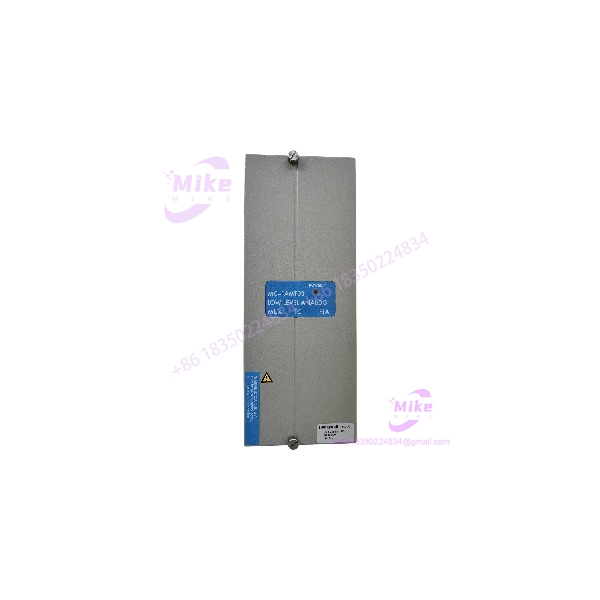
Honeywell MC-TAMT03 | Thermocouple FTA
Product Introduction
When a legacy Honeywell temperature-input cabinet starts losing thermocouple channels, the failure may look like a sensor problem at first. Then the loop checks out, the field wiring checks out, and the cabinet-side termination becomes the suspect. That is where the Honeywell MC-TAMT03 earns its place in the spare-parts inventory.
The MC-TAMT03 51309223-175 is a 16-channel low-level multiplexer thermocouple Field Termination Assembly (FTA). Honeywell documentation places it in the LLMux TC category, while published technical data identifies compression terminals and local cold-junction reference. The assembly is intended for thermocouple signal termination within the associated Honeywell PM I/O architecture—not as a generic analog input card.
That distinction matters. The board may physically resemble other Honeywell FTAs, but the signal type, companion I/O hardware, terminal configuration, and cold-junction arrangement must agree. A five-minute part-number check can prevent a much longer commissioning problem.
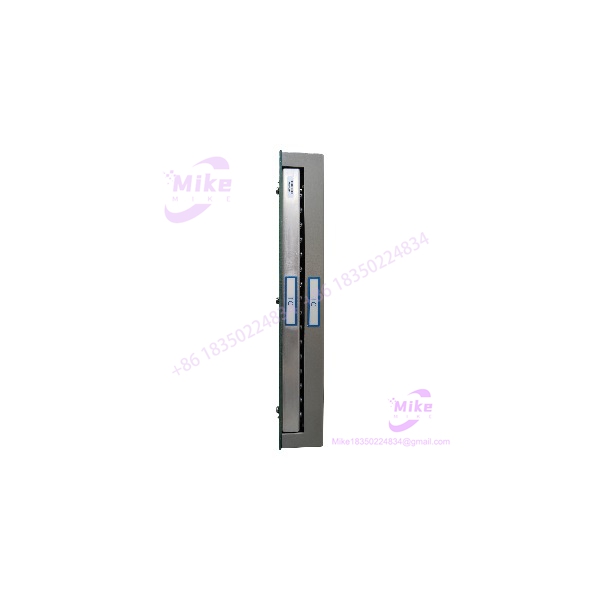
MC-TAMT03 51309223-175
Key Technical Specifications
- Manufacturer: Honeywell
- Model: MC-TAMT03
- Part Number: 51309223-175
- FTA Type: LLMux TC
- Application: Low-level thermocouple signal termination
- Input Capacity: 16 channels
- Input Configuration: Differential thermocouple inputs
- Terminal Type: Compression terminals
- Cold-Junction Arrangement: Local CJR
- Physical Size: Size B
- Coating: Conformally coated
- Supply Voltage: 24 VDC
- Published Supply Range: 15–30 VDC
- Published Power Consumption: 2.25 W
- Published Operating Temperature: 0–50°C
- Companion LLMux IOP: MU-PLAM02 or MC-PLAM02 according to available product documentation
- CE Version: 51309223-175 is listed as the CE-compliant MC-TAMT03 part number in Honeywell’s planning documentation.
The hardware-planning reference is particularly useful because it separates MC-TAMT03 51309223-175 from MC-TAMT02 51401491-150 and from the RTD-oriented MC-TAMR series.
Application Scenarios & Pain Points
Legacy Temperature Measurement
Without MC-: A failed thermocouple FTA can take multiple temperature channels out of service while the controller, field sensors, and process remain otherwise operational.
With the correct MC-: Maintenance can restore the existing LLMux thermocouple signal path without immediately redesigning the entire I/O architecture.
That is particularly useful on plants where the control system has accumulated years of field modifications. The documentation may say one thing; the cabinet wiring may tell another story.
High-Channel-Count Temperature Monitoring
Sixteen thermocouple channels in one termination assembly makes the MC- suitable for distributed temperature measurements across process equipment, furnaces, heat-transfer equipment, and other thermal monitoring applications.
A single incorrect FTA can create a deceptively difficult fault: several temperature points may fail together, making the process engineer suspect a common field power or controller problem.
With vs. Without Local CJR
Without the appropriate cold-junction arrangement: Thermocouple measurements can be interpreted incorrectly because thermocouples require reference-junction compensation.
The documented assembly incorporates a local CJR arrangement for its thermocouple termination architecture.
Do not treat CJR as a minor specification. It is part of the measurement chain.
Legacy System Migration
Honeywell’s LLMUX architecture has also been addressed in migration documentation. Schneider Electric’s migration guide lists MC- / 51309223-175 among Honeywell LLMUX/2 thermocouple FTAs and identifies a corresponding migration path to its FBM202 hardware.
That is useful when evaluating a migration project—but it does not mean the MC- should be casually substituted with another vendor’s module in an operating Honeywell system.
QA & Live Testing SOP
For an obsolete or surplus Honeywell MC-, identification comes before electrical testing.
- Part verification: Confirm and 51309223-175 on the physical label.
- Revision inspection: Record board revision and manufacturing markings before installation.
- Terminal inspection: Check every compression-terminal position for damage, contamination, loose hardware, or signs of overheating.
- CJR inspection: Verify the local cold-junction hardware is intact and undamaged.
- PCB inspection: Look for corrosion, cracked solder joints, damaged components, contamination, and previous repair work.
- Conformal-coating check: Inspect the coating for peeling, mechanical damage, or contamination.
- Power test: Apply controlled DC power within the documented range using current-limited test equipment.
- Channel test: Where the appropriate Honeywell test environment is available, simulate representative thermocouple signals across multiple channels.
- I/O verification: Confirm the companion LLMux IOP recognizes the assembly correctly.
- ESD packaging: Handle the assembly at a grounded ESD workstation and package it in appropriate antistatic protection.
Do not call a board “tested” simply because it powers up. For a temperature FTA, the meaningful test is whether the intended channels accept representative signals and deliver credible readings through the complete I/O path.
Field Engineer’s Pitfall Guide
❗ Do not confuse MC- with MC-TAMR03. The names are nearly identical, but MC- is the thermocouple version, while MC-TAMR03 is the RTD version. Honeywell’s hardware planning documentation assigns different part numbers to them.
❗ Do not ignore the companion I/O hardware. The MC- is an FTA, not a standalone PLC analog-input card. Published documentation associates it with the LLMux I/O architecture and specifically identifies MU-PLAM02 or MC-PLAM02 as compatible LLMux IOP references. Verify the actual installed configuration before replacement.
❗ Do not swap thermocouple types blindly. Verify the plant configuration, thermocouple alloy, polarity, extension-wire type, channel assignment, and cold-junction arrangement. A wiring error can produce a plausible temperature value—which is sometimes more dangerous than an obvious open circuit.
Also record the existing channel mapping before disconnecting field wiring. Sixteen channels can become sixteen troubleshooting jobs very quickly if the labels are not preserved.
Intent-Driven FAQ
What is the Honeywell MC-?
The Honeywell MC- is a 16-channel Low-Level Multiplexer Thermocouple Field Termination Assembly used in Honeywell PM I/O architectures. The associated part number is 51309223-175.
Is MC- for RTD or thermocouple inputs?
Thermocouple. Honeywell’s hardware planning documentation categorizes MC- as LLMux TC. The closely related MC-TAMR03 belongs to the RTD family, so those two should not be treated as interchangeable.
How many channels does MC- support?
The documented configuration provides 16 thermocouple input channels. The inputs are identified as differential channels in available product specifications.
What is the part number for MC-?
The documented CE-compliant part number is 51309223-175. Honeywell’s hardware planning guide explicitly maps this part number to .
What type of terminals does MC- use?
Compression terminals. This is specifically identified in Honeywell’s hardware-planning documentation and independent product specifications.
Does MC- have cold-junction compensation?
The published hardware description identifies Local CJR for MC-. Because thermocouple measurement depends on reference-junction compensation, verify that the installed configuration uses the expected CJR arrangement before commissioning.
What power supply does MC- require?
Available technical specifications identify 24 VDC, with a stated 15–30 VDC supply range and approximately 2.25 W maximum power consumption. Verify the applicable Honeywell documentation for the exact installed revision before energizing a replacement.
Can I replace MC- with MC-TAMR03?
No—not as a routine drop-in substitution. MC- is documented for thermocouple inputs, while MC-TAMR03 is an RTD FTA. The signal-conditioning and measurement requirements are different.
Is Honeywell MC- obsolete?
At least one established industrial automation supplier lists 51309223-175 as discontinued by the manufacturer. Because lifecycle status can vary by revision and replacement program, verify the exact part number and current OEM availability before planning a long-term spare strategy.
Can I hot-swap MC-?
Do not assume it is hot-swappable. Follow the applicable Honeywell maintenance procedure for the installed PM I/O architecture. Unless live replacement is explicitly supported for the particular configuration, isolate the equipment before disconnecting field wiring or removing the FTA.
What should I verify before buying a replacement?
Match , 51309223-175, revision, terminal configuration, LLMux companion hardware, field wiring, and system architecture. Also verify whether the offered unit is new surplus, refurbished, or previously installed. For obsolete DCS hardware, those distinctions can materially affect commissioning risk.
What warranty should I expect?
Warranty terms depend on the supplier and condition of the particular unit. Do not assume an aftermarket warranty is an OEM warranty. Before purchasing, obtain the written coverage period and confirm exactly what is covered—especially whether functional failure after installation and commissioning is included.





