

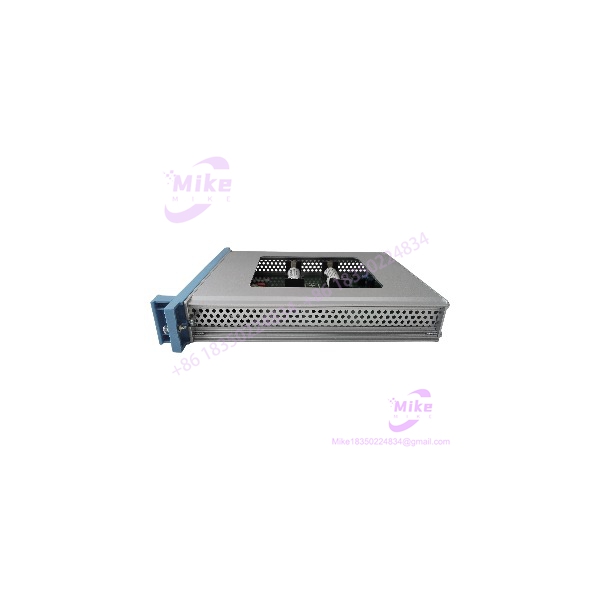
Description
Honeywell FC-BKM-0001 | 24VDC Battery Key Switch Module
Dynamic Product Introduction
A failed FC-BKM-0001 is not something to treat like an ordinary spare relay or passive terminal block. This module sits inside the Honeywell Safety Manager controller architecture and combines two functions that directly affect maintenance and controller operation: battery backup and key-switch control.
Honeywell’s hardware reference identifies FC-BKM-0001 and FS-BKM-0001 as the type numbers for the BKM-0001 module. The module operates from 24 VDC, provides a regulated/reference 5 V supply input, and contains the battery arrangement used by the controller. Honeywell specifies a maximum 24 V supply current of 20 mA from each 24 VDC supply, with approximately 7 mA typical shared load.
The BKM-0001 also contains the Force Enable key switch and Reset key switch. Honeywell’s documentation describes the module as part of the controller chassis, including redundant-controller installations where there is still only one . That makes exact configuration verification important before ordering a replacement.
Battery condition deserves particular attention. The specified battery is a SAFT LS14500CFG lithium thionyl chloride cell, nominally 3.6 V with capacity greater than 2 Ah. Honeywell states that the specified battery manufacturer and type are necessary for maintaining the relevant UL approval.
In other words, the is a small module with a disproportionately important maintenance role. A visually clean spare with an unknown battery history is not automatically a good spare.
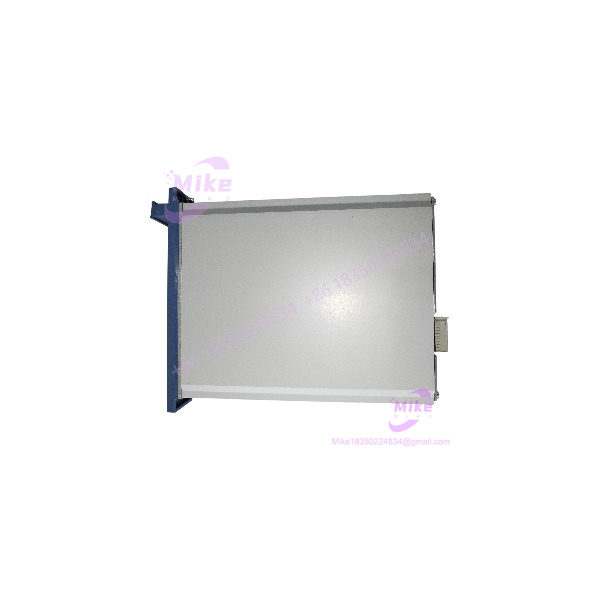
FC-BKM-0001
Key Technical Specifications
- Manufacturer: Honeywell
- Part Number:
- Functional designation: Battery and Key Switch Module
- System: Honeywell Safety Manager
- Related type number: FS-
- Operating temperature: -5°C to +70°C
- Storage temperature: -40°C to +85°C
- Relative humidity: 10–95%, non-condensing
- Approvals: CE, TUV, UL, CSA, FM
- 24 V supply: 24 VDC, -15% to +30%
- 24 V supply current: 20 mA maximum per 24 VDC supply; approximately 7 mA typical shared load
- 5 VR supply: 5 VDC ±10%
- 5 VR current: 10 mA maximum
- +24V_red output: 14–31 VDC
- Output resistance: Approximately 2 × 1.1 kΩ in parallel
- Short-circuit protection: Continuous
- Battery manufacturer: SAFT
- Battery type: LS14500CFG
- Battery chemistry: Lithium thionyl chloride
- Battery voltage: 3.6 V nominal
- Battery capacity: >2 Ah
- Dimensions: Approximately 176 × 35.2 × 224 mm
- Weight: Approximately 660 g
Honeywell documentation also notes that Version 1.0 modules have a darker blue front plate. Therefore, visual differences between generations should not automatically be interpreted as counterfeit hardware—but the version should still be recorded before installation.
Global Sourcing & Live-Test SOP
For procurement, battery condition and key-switch operation belong in the acceptance test. A basic continuity check is not enough.
Inbound Verification
First record:
- Exact FC- identification
- Hardware/version marking
- Serial number
- Front-panel condition
- Key-switch condition
- Battery condition and date information where available
- Connector condition
- PCB and conformal-coating condition
- Evidence of corrosion, impact, or previous repair
The Honeywell specification identifies as a controller-chassis module and also lists as a related type number. Do not substitute between these identifiers merely because the physical module appears similar.
Live Simulation
The preferred test is installation in an authentic Safety Manager test environment or an approved maintenance/test chassis.
Verify:
- Module recognition
- STATUS indication
- Battery status
- Force Enable key-switch operation
- Reset key-switch operation
- Controller diagnostic response
- 24 V supply behavior
- +24V_red output
- General-purpose input behavior
Honeywell documents diagnostics for and battery voltage conditions including too high, too low, and open-circuit states. Those diagnostic paths are considerably more useful than simply confirming that the front-panel LED illuminates.
Diagnostics
Use a calibrated multimeter to verify the supply voltage against the documented 24 VDC range. Check the battery circuit independently and inspect the module for signs of leakage or abnormal resistance.
The battery is a non-rechargeable lithium thionyl chloride type. Battery replacement should follow the approved Honeywell procedure and use the specified battery type where the safety certification requires it.
Check the key switches mechanically through their complete positions. A switch that changes state electrically but has excessive mechanical play should not be accepted as equivalent to a serviceable module.
Final Prep
Record the:
- Module version
- Battery type
- Battery condition
- Key-switch operation
- LED/status behavior
- Controller diagnostic result
- Supply measurements
- Physical condition
Then protect the module against ESD, shock, and accidental key-switch movement during transport.
The Field Engineer’s Pitfall Guide
❗ Do Not Remove the With Force Enable in the Wrong Position
Honeywell’s maintenance documentation specifically warns that the should only be removed with the Force Enable key switch in the OFF position. Removing the module can remove all forces.
This is not a cosmetic service instruction. Treat it as a safety-system maintenance procedure.
❗ Battery Condition Is a Functional Parameter
A module can look perfect and still be a poor spare if the lithium battery has been sitting in storage for years.
The specified SAFT LS14500CFG battery is a 3.6 V lithium thionyl chloride cell with capacity greater than 2 Ah. Honeywell’s diagnostic system monitors battery voltage conditions, including low voltage and open circuit.
I’ve seen legacy safety-system spares become unusable because procurement focused on the module label while nobody checked battery age.
❗ A Broken Cover Changes the Procurement Risk
The specific marketplace unit supplied here is listed as used, described as “working good,” and explicitly identified as having a broken cover. The listing price is currently US $1,450, with a 30-day return policy shown on the page.
That does not prove the electrical assembly is defective. It does mean the buyer should determine whether the broken cover affects key-switch security, mounting integrity, internal contamination protection, or the ability to install the module safely.
For a safety-system component, I would request close-up photographs of the damage and confirmation of battery condition before approving the purchase.
Intent-Driven FAQ
What exactly does the Honeywell FC- do?
The is the Safety Manager Battery and Key Switch Module. It combines controller battery backup with Force Enable and Reset key-switch functions. It also interfaces with the controller’s general-purpose 24 VDC input circuitry.
Is FC- an I/O module?
No. It should not be classified as a conventional analog or digital I/O card.
Its primary role is controller maintenance, battery backup, key-switch control, and associated supply/input functions within the Safety Manager chassis.
Can I hot-swap an FC-?
Do not assume hot-swapping is permitted.
Honeywell specifically states that removal should be performed with the Force Enable key switch OFF, and removing the module can remove all forces. Follow the applicable Safety Manager maintenance procedure rather than treating the module as a plug-in I/O card.





