

Description
GE IS200TREAS1A | Mark VIe Aero Trip Interface Board
Product Introduction
Emergency trip hardware is not a board to select by visual similarity. The GE IS200TREAS1A is a turbine emergency trip terminal board used in the Mark VIe/Mark VIeS turbine protection architecture. It provides field wiring interfaces for turbine protection functions and works with the appropriate protection I/O pack.
GE documentation identifies IS200TREAS1A as a TREA terminal board associated with the IS220PPRAS1A/1B protection I/O pack. The TREA interface supports turbine speed signals, trip-string voltage detection, emergency-stop inputs, and trip outputs. Its role is specific to the protection system, so the complete board number and approved I/O-pack combination should be verified before installation.
For maintenance teams sourcing a replacement, confirm the terminal style, board revision, and installed protection architecture. A similar TREA model may have a different voltage or connector configuration.
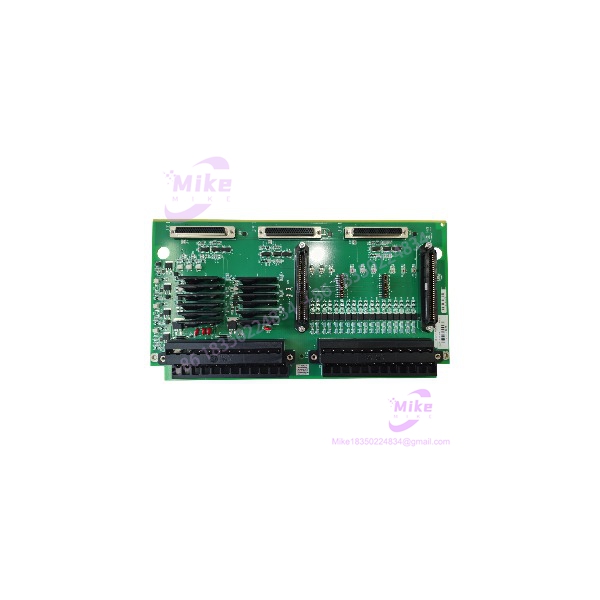
IS200TREAS1A
Key Technical Specifications
- Manufacturer: General Electric
- Model: IS200TREAS1A
- Functional Acronym: TREA
- Product Family: Mark VIe / Mark VIeS
- Board Function: Turbine Emergency Trip terminal interface
- Application: Aeroderivative turbine emergency trip protection
- Associated Protection I/O Pack: IS220PPRAS1A / IS220PPRAS1B
- Nominal Power Supply: 28 VDC
- Power Supply Current: Up to 0.5 A, per applicable system documentation
- Contact Input Limit: 0–32 VDC
- Voltage Detection Input: 16–140 VDC
- Emergency-Stop Input: 18–140 VDC
- Speed Input Range: -15 to +15 VDC
- Contact Output Limit: Up to 28 VDC, 7 A, per documented rating
- Terminal Style: Block-terminal configuration; confirm the exact installed assembly
- System Documentation: GEH-6725 series Mark VIe/Mark VIeS control-system documentation
Electrical ratings are based on GE Mark VIe/Mark VIeS system documentation for the applicable TREA protection architecture. Confirm the exact board revision, wiring configuration, and permitted operating limits before field use.
Global Sourcing & Live-Test SOP
For a used or surplus GE IS200TREAS1A, appearance alone does not establish suitability for an emergency trip application. Treat it as a configuration-specific protection component.
1. Inbound Verification
- Photograph the complete GE nameplate and board markings.
- Confirm the exact IS200TREAS1A model number.
- Record the revision, serial number, and date code where available.
- Inspect terminal blocks, connectors, PCB edges, and mounting points.
- Check for corrosion, heat damage, contamination, or evidence of repair.
- Verify that the terminal style matches the customer’s original board.
- Compare the supplied board against the system’s approved parts list.
2. Configuration and Compatibility Review
- Confirm the installed Mark VIe or Mark VIeS protection architecture.
- Verify the intended PPRO I/O pack and approved TREA combination.
- Check the terminal wiring and trip-string voltage configuration.
- Confirm whether the application is simplex or TMR.
- Verify that the exact board revision is approved for the intended replacement.
- Do not assume another TREA variant is interchangeable based on family name alone.
3. Controlled Functional Testing
Testing must use an appropriate GE-compatible test arrangement and qualified personnel.
- Verify the documented supply arrangement before applying power.
- Inspect terminal connections and confirm wiring against the applicable drawings.
- Check startup and diagnostic indications where available.
- Simulate relevant input conditions only within the approved test procedure.
- Verify trip-output behavior using suitable test loads and isolation.
- Record test setup, measured results, and any observed faults.
Do not perform improvised trip testing on an operating turbine or safety system.
4. Extended Run and Diagnostics
Where a suitable test setup is available, perform an extended functional run appropriate to the component and application.
Monitor:
- Supply stability
- Input response
- Output switching behavior
- Diagnostic status
- Intermittent faults
- Abnormal heating
- Terminal and connector integrity
Record the test duration, board revision, test configuration, and results. Do not describe the board as fully tested unless the test scope supports that claim.
5. Final Preparation
- Record the exact part number, revision, and serial number.
- Photograph the board and terminal configuration before packaging.
- Preserve available test and traceability records.
- Use ESD-safe packaging.
- Protect terminal blocks and connectors from impact.
- Clearly state whether the unit is new surplus, used, refurbished, tested, or untested.
Field Engineer’s Pitfall Guide
❗ Do not confuse TREA terminal-board variants
The TREA family includes different variants with different terminal arrangements and voltage configurations. Verify the complete model number and terminal style. Do not substitute a related TREA variant without checking the approved system documentation.
❗ Confirm the protection I/O pack pairing
GE documents the in association with the IS220PPRAS1A/1B protection I/O pack. Confirm the exact installed pack, board revision, and system architecture before replacement. A physical fit is not proof of an approved safety-system configuration.
❗ Treat emergency-trip circuits as safety-critical
The TREA board interfaces with turbine protection and trip functions. Incorrect field wiring, voltage assumptions, or test methods can compromise the protection system. Follow the approved GE drawings and site procedures; do not improvise live trip testing.
Intent-Driven FAQ
What is the GE ?
The is a GE Mark VIe/Mark VIeS Turbine Emergency Trip terminal board used in turbine protection applications.
Which I/O pack is associated with the ?
GE documentation lists the with the IS220PPRAS1A/1B protection I/O pack. Confirm the exact pack and approved hardware configuration for the application.
What does the TREA board do?
It provides field interfaces for turbine protection functions, including speed signals, trip-string voltage detection, emergency-stop inputs, and trip outputs.
Is the interchangeable with other TREA boards?
Not automatically. TREA variants can differ in terminal configuration and voltage application. Verify the full model number and approved replacement information before substituting another variant.
Is the hot-swappable?
Do not assume it is hot-swappable. Treat replacement as a controlled maintenance activity under the plant’s approved turbine protection procedure. Follow GE documentation for isolation, removal, and commissioning.
Is the GE obsolete?
It is a legacy GE turbine-control component that may be sourced through industrial surplus and replacement-part suppliers. Current availability, lifecycle status, and condition should be confirmed at the time of purchase.
What should I verify before buying?
Confirm the complete model, board revision, terminal style, physical condition, test status, and compatibility with the installed protection I/O pack. Request clear nameplate and terminal-side photographs before purchase.
Bottom Line for Buyers
The is a Mark VIe/Mark VIeS Turbine Emergency Trip terminal board used in a defined turbine protection architecture. Its replacement suitability depends on the exact board revision, terminal configuration, and approved protection I/O-pack pairing.
Before ordering, match the complete model number to the installed hardware and request clear photos plus documented test status. For a safety-related application, do not treat a family-level match or seller compatibility statement as sufficient proof of interchangeability.





