


Description
Foxboro FBM02 | 8-Channel Isolated TC Input
Product Introduction
Temperature measurement is one of the places where a DCS input module cannot be treated as a generic analog card. Thermocouple signals are low-level millivolt measurements, so isolation, reference-junction compensation, conversion behavior, and field wiring all matter.
The Foxboro FBM02 is a legacy I/A Series fieldbus module designed specifically for this job. Schneider Electric’s official product specification identifies it as the Thermocouple/mV Input Interface Module, containing eight isolated thermocouple input channels plus one isolated RTD reference-junction compensation channel. The module converts these field signals for transmission over the redundant I/A Series Fieldbus.
Each FBM02 channel includes a burnout indication function and supports standard thermocouple signal types over the module’s configured measurement ranges. The module is a main-type FBM and independently connects to the redundant Fieldbus rather than relying on an expansion module.
For replacement work, FBM02 should therefore be matched to the existing I/A Series configuration, termination arrangement, software database, and field wiring—not simply selected because the connector appears compatible.
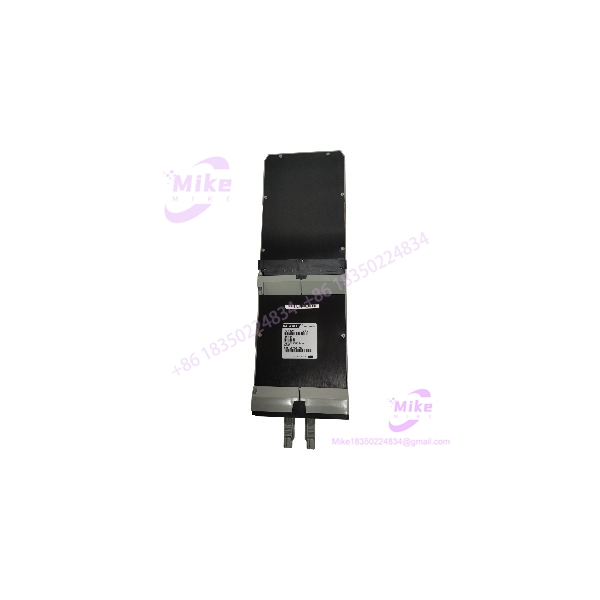
FBM02
Key Technical Specifications
- Manufacturer: Foxboro
- System: I/A Series DCS
- FBM Type: FBM02
- Function: Thermocouple / millivolt analog input
- Input Channels: 8 isolated thermocouple/mV channels
- Reference Junction: 1 isolated RTD reference-junction compensation channel
- Fieldbus: Redundant I/A Series Fieldbus
- Module Architecture: Main-type FBM
- Burnout Detection: Full-scale indication on burnout
- Input Signal: Standard thermocouple and low-level millivolt signals
- Nominal mV Measurement Range: Approximately -10.5 to +71.4 mV, depending on configuration
- Analog Resolution: Configurable; 11- through 15-bit options are documented for the 100 Series FBMs
- Integration Time: Configurable from 100 ms to 1000 ms
- Update Period: 25 ms for the documented 100 Series conversion options
- Reference Sensor: RTD-based terminal/reference-junction temperature measurement
The I/A Series documentation specifies configurable FBM02 conversion options of 100, 200, 500, and 1000 ms integration, with a 25 ms update period. The documented default for thermocouple applications is 14-bit resolution.
Signal Compatibility
The is intended for thermocouple and millivolt measurement rather than conventional 4–20 mA process transmitters. Foxboro’s later FBM202 serves as the 200 Series successor/upgrade path for the earlier function, retaining the eight-channel thermocouple/mV concept while adding newer hardware architecture.
This distinction is important when selecting replacement hardware:
FBM01 is the 0–20 mA input module, while is the thermocouple/mV input module. Schneider Electric’s I/A Series catalog explicitly separates these two functions.
Global Sourcing & Live-Test SOP
1. Inbound Verification
For a used or surplus , inspection should begin with identification rather than power-up.
- Confirm the board/module marking is .
- Record the complete part number and revision.
- Photograph the module and termination interface.
- Inspect connectors for bent or recessed contacts.
- Check the PCB for corrosion, contamination, overheating, or repaired traces.
- Verify the termination assembly is appropriate for the .
- Record serial/date codes for procurement traceability.
- Match the received hardware against OEM or customer documentation.
2. Live Simulation
A proper test requires an I/A Series-compatible test environment.
Recommended checks include:
- Verify fieldbus communication.
- Confirm module initialization.
- Inject known millivolt signals into individual channels.
- Verify thermocouple simulation where supported.
- Test reference-junction compensation.
- Check channel isolation.
- Verify burnout indication behavior.
- Compare measured values against calibrated input references.
- Confirm redundant Fieldbus communication where the installation uses redundancy.
A generic 24 VDC bench test should not be represented as a complete functional test.
3. Diagnostics
Use calibrated instrumentation to check:
- Fieldbus communication status.
- Channel response.
- Input linearity.
- Reference-junction measurement.
- Burnout detection.
- Conversion/update behavior.
- Intermittent connector faults.
- Module diagnostic indications.
For critical process applications, a controlled extended run should be included in the acceptance procedure.
4. Final Preparation
Before shipment:
- Clean the module using an electronics-safe process.
- Protect all connectors against contamination and ESD.
- Record module revision and test status.
- Package in ESD-safe material.
- Maintain serial-number traceability.
- Clearly identify whether the module is new, used, refurbished, or untested.
Do not claim factory testing, OEM sealing, or refurbishment unless supporting documentation exists.
Field Engineer’s Pitfall Guide
❗ Do not substitute an FBM01 based on channel count:
Both modules belong to the I/A Series 100 FBM family, but FBM01 handles 0–20 mA inputs while handles thermocouple/mV signals. The signal-conditioning architecture is fundamentally different.
❗ Check the termination assembly:
The can be supplied with different field-termination arrangements. A module replacement should be checked against the installed termination hardware and field wiring before commissioning.
❗ Do not ignore conversion configuration:
The supports selectable resolution and integration-time settings. A replacement module must be configured consistently with the DCS database and process-control requirements; otherwise, apparent temperature instability may actually be a configuration mismatch.
Intent-Driven FAQ
What is the Foxboro ?
The is an I/A Series 100 fieldbus module for thermocouple and millivolt analog inputs. It provides eight isolated measurement channels and an isolated RTD reference-junction compensation channel.
How many inputs does have?
It provides 8 isolated thermocouple/mV input channels, plus a separate isolated reference-junction compensation channel.
Is a 4–20 mA input module?
No. The standard is designed for thermocouple and millivolt signals. The I/A Series FBM01 is the 0–20 mA input module.
What thermocouples can handle?
The module supports standard thermocouple types through its configured signal-conditioning and temperature-characterization functions. The exact usable range depends on the thermocouple type and selected configuration.
Does provide channel isolation?
Yes. Foxboro documentation specifically identifies the eight thermocouple input channels as isolated.
Is obsolete?
It is a legacy 100 Series I/A FBM. Schneider Electric’s current documentation describes the newer FBM202 as providing the functionality formerly supplied by the 100 Series , making FBM202 an important consideration in a migration strategy.
Can FBM202 replace ?
FBM202 was specifically designed to provide the functionality formerly provided by the 100 Series , with appropriate termination assemblies or a termination assembly adapter. The replacement still requires checking the existing I/A Series architecture, field wiring, software configuration, and migration documentation.





