Description
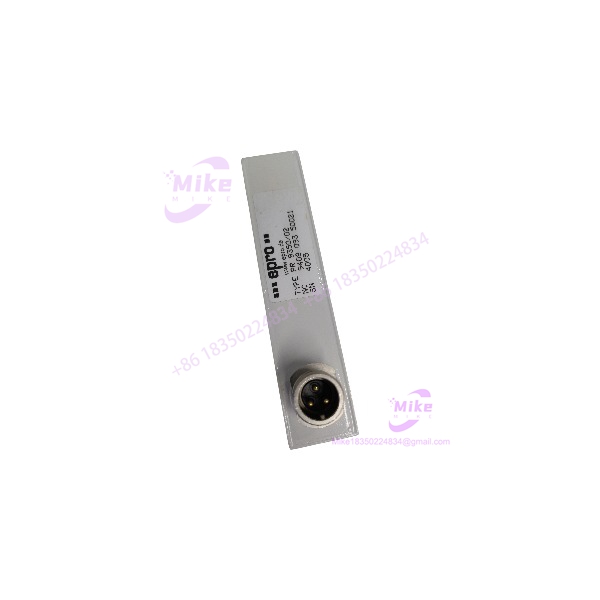
Emerson Epro PR9350/02 | Eddy Current Proximity Sensor, New
Architect’s Product Breakdown
The Emerson Epro PR9350/02 functions as a critical non-contact transducer designed for continuous machinery health monitoring in steam turbines, heavy gas compressors, boiler feed pumps, and industrial gearboxes. By generating a high-frequency electromagnetic field at the probe tip, the sensor monitors air-gap variations between the tip face and the target shaft. These physical position fluctuations are converted into proportional voltage signals that feed directly into machine protection systems to detect imbalance, misalignment, or shaft runout before catastrophic equipment failure occurs.
Deploying this specific model requires precise alignment during physical installation to maintain the target within the sensor’s linear operating region. Because eddy-current measurement relies on strict impedance and capacitance balance across the total loop, field engineers must pay close attention to cable routing, connector tightness, and isolation from external electromagnetic interference. Installing the probe inside hot bearing housings also demands verification of thermal expansion tolerances to ensure mechanical growth does not drive the probe face directly into the rotating shaft.
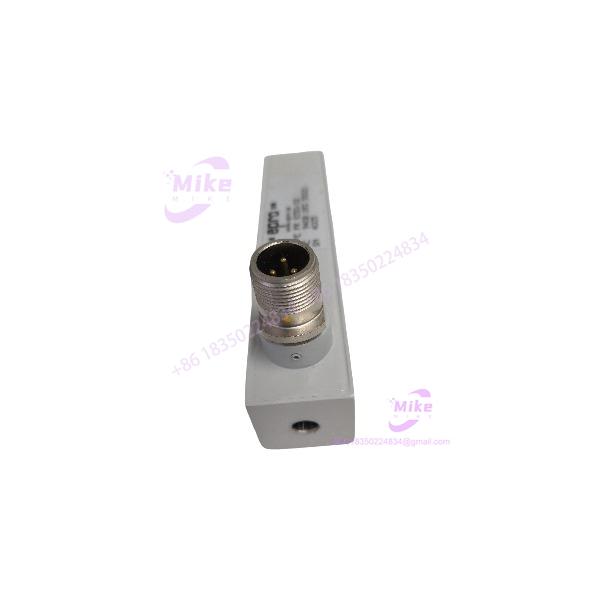
PR9350/02
Key Technical Specifications
| Parameter | Specification Details |
| Measurement Principle | Non-contact eddy-current induction |
| Supply Voltage | Powered via signal driver / signal converter system |
| Linear Range | Nominal target air-gap operating window |
| Frequency Response | DC to 10,000 Hz |
| Target Material | Standard ferromagnetic steel (e.g., 42CrMo4) |
| Probe Tip Housing | Encapsulated PEEK / stainless steel body |
| Connector Type | High-frequency coaxial interface |
| Operating Temperature | -35°C to +180°C (probe head environment) |
| Enclosure Rating | IP65 / IP67 (when mated with suitable sealing hardware) |
Field Engineer’s Pitfall Guide (Unique Value)
- Signal Cable Splice Alterations: Never cut, splice, or extend the high-frequency coaxial cable attached to the probe assembly. Altering cable length changes total circuit capacitance, shifting the calibration curve and causing severe measurement errors on the monitoring rack.
- Incorrect Resting Gap Setup: Setting the mechanical static gap outside the linear midpoint during cold shutdown will lead to signal clipping when the machine reaches thermal equilibrium under load. Always set and verify the static resting gap voltage with a calibrated multimeter prior to startup.
- Cross-Talk Interference: Mounting multiple eddy-current probes too close together without adequate physical spacing causes electromagnetic cross-talk between high-frequency fields. Maintain recommended probe-to-probe center distances to prevent phantom vibration frequencies in your spectrum analysis.
QA & Testing SOP (Transparency)
- Visual & Origin Verification: Inspection of OEM housing threads, serial tags, PEEK tip condition, and coaxial connector integrity.
- Live Test Environment: Bench testing the probe connected to its matching signal driver on a micrometer calibration fixture powered by a regulated DC source.
- Diagnostics & Calibration Verification: Testing static gap voltage response, verifying dynamic linearity across the operating range, and inspecting signal noise levels.
- Documentation & ESD Packaging: Archiving inspection logs, fitting protective covers over tips/connectors, and sealing the unit inside static-shielding packaging.
Technical FAQ
- Can I connect this probe directly to a standard PLC analog input card? No. Eddy-current probes produce a high-frequency impedance shift that requires a dedicated signal driver or signal converter module (such as the CON series) to output a calibrated voltage or 4-20 mA signal.
- Does lubricating oil spray inside a bearing housing affect reading accuracy? No, non-conductive synthetic or mineral lubricating oil does not interfere with the eddy-current magnetic field.
- What happens if my shaft material is stainless steel instead of carbon steel? Standard factory calibrations are set against carbon steel targets. Alternative metallurgy alters the sensitivity slope, requiring custom calibration offsets within your protection system hardware.
- Can the probe tip withstand direct contact with the shaft during severe vibration events? While the probe face is constructed from durable PEEK, direct shaft contact at operational speeds will mechanically wear or destroy the tip encapsulation, requiring probe replacement.