Description
Allen-Bradley 1440-TB-H | Factory Surplus AB Terminal Block Available Now
Dynamic Product Introduction
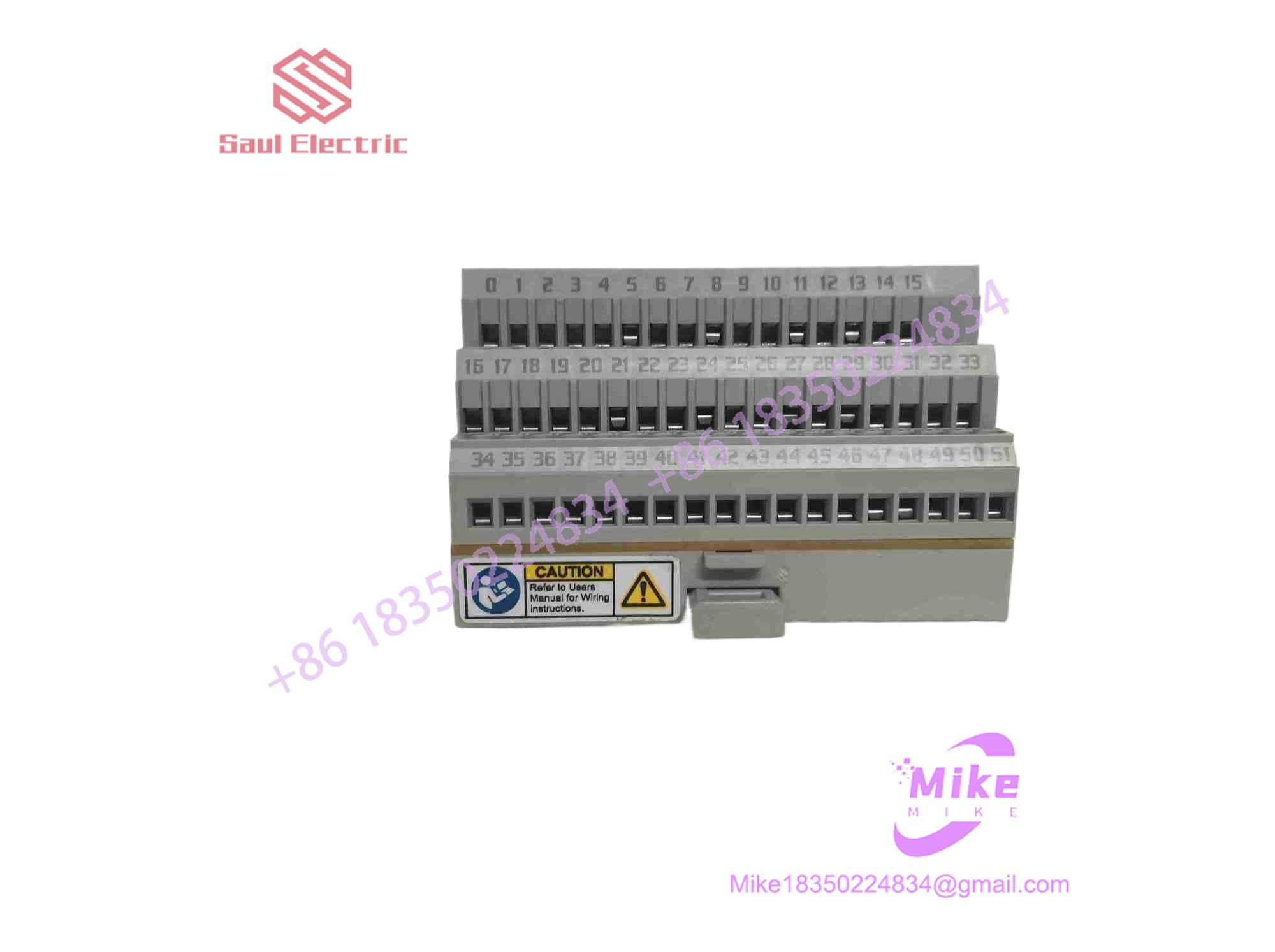
Intermittent sensor signals and loose wiring faults in vibration monitoring racks usually track back to degraded terminal bases rather than the core processor module. When an aging terminal base suffers from screw-thread stripping or spring-clip fatigue under heavy industrial vibration, sensor connectivity fails and triggers false machinery protection alarms. The Allen-Bradley 1440-TB-H terminal base resolves these issues by providing a rigid, high-integrity physical foundation and secure wiring interface for the XM dynamic measurement platform.
Unlike standard commercial terminal blocks, this specialized base unit is engineered specifically to maintain low-impedance grounding and reliable backplane communication in harsh, high-vibration machine monitoring environments. Maintaining absolute signal fidelity across critical rotating equipment monitoring systems demands exact hardware matching—making this terminal base essential for preventing unexpected downtime.
1440-TB-H
Key Technical Specifications
| Parameter | Specification Detail |
| Manufacturer | Allen-Bradley (Rockwell Automation) |
| Catalog Number | 1440-TB-H |
| System Family | XM / 1440 Dynamic Measurement Platform |
| Module Type | Terminal Base Unit (Base H) |
| Compatibility | Designed for XM-160 and select 1440 monitoring modules |
| Mounting Type | DIN Rail or Panel Mount |
| Termination Style | Secure screw-clamp field wiring terminals |
| Operating Environment | Industrial machinery enclosures (0^\circ C to 65^\circ C) |
Global Sourcing & Live-Test SOP (Transparency Core)
Acquiring secondary-market monitoring hardware infrastructure requires strict mechanical and electrical verification to ensure zero thread wear, corrosion, or backplane bus damage before installation. Our multi-stage qualification protocol covers:
- Inbound Verification: Incoming terminal bases undergo high-magnification optical inspection along the screw terminals, spring-loaded retention clips, and backplane connector pins to check for pitting, oxidation, or mechanical stress. OEM part numbers are cross-referenced against historical archives.
- Live Simulation: We mount the terminal base onto a dedicated Allen-Bradley XM test rack configured to validate backplane communication continuity and power bus distribution.
- Diagnostics: Engineers execute multi-point continuity tests across all terminal blocks and verify bus pin alignment to ensure zero signal drop or high-resistance paths under simulated thermal load cycles.
- Final Prep: Once testing criteria are met, the unit is cleaned, terminal screws are checked for torque compliance, and the base is sealed inside an antistatic packaging barrier.
The Field Engineer’s Pitfall Guide
❗ Hot-Plugging Module Risks: Never insert or remove an active XM monitoring module from the 1440-TB-H base while system power is energized. Doing so can cause electrical arcing, damage backplane pins, and corrupt measurement loops.
❗ Over-Torquing Terminal Screws: I’ve seen technicians strip terminal blocks by cranking down too hard on the screw clamps with power drivers. Always hand-tighten field wiring to manufacturer-specified torque limits to avoid ruining the base.
❗ Improper Ground Shield Termination: Failing to ground signal cable shields properly at the designated terminal points on the base can inject massive electromagnetic noise into vibration monitoring channels, causing erratic readings.
Intent-Driven FAQ
Can the 1440-TB-H terminal base be used with any Allen-Bradley XM module?
No. Terminal bases are specifically keyed and mapped to match exact module types (such as the XM-160). Always verify compatibility before snapping a module onto the base.
What causes these terminal bases to fail in industrial environments?
Chronic mechanical vibration from heavy rotating machinery, corrosive atmosphere exposure, and over-tightening of field wiring screws are the primary drivers of physical degradation.
How do I test if my sensor fault is caused by the terminal base or the monitoring module?
Isolate the loop by checking continuity from the field wiring through the terminal block to the module backplane pins using a multimeter. If the connection drops under slight physical flexing, the terminal base requires replacement.
Are replacement terminal components field-repairable?
Individual internal bus traces and block housings are not field-repairable. Complete base replacement ensures mechanical integrity and continuous system reliability.
What level of warranty is included with this surplus terminal base?
We back this component with a comprehensive one-year replacement warranty, covering material defects and mechanical performance under standard industrial operating conditions.