


Description
ABB HENF209568R0001 P3LB RF HYBRID
The difference between PID controllers and PWM controllers
I. Introduction
In industrial automation and control system design, PID controllers (Proportional-Integral-Derivative controllers) and PWM controllers (Pulse Width Modulation controllers) are two commonly used control strategies. Although both can achieve precise system control, they differ significantly in principle, application, and control characteristics. This article will provide a detailed comparison and analysis of PID controllers and PWM controllers to reveal their differences.
Overview of PID Controller
PID controller is a feedback based control algorithm consisting of three control terms: proportional (P), integral (I), and derivative (D). It measures the difference (i.e. error) between the output value of the controlled object and the expected value, and then processes the error based on the three control terms P, I, and D to obtain the output of the controller. The principle of PID controller is based on error feedback regulation and has adaptive ability, which can dynamically adjust control parameters according to actual situations.
principle
The principle of PID controller is based on error feedback regulation. It first measures the output value of the controlled object, and then compares it with the expected value to obtain the error. Next, the error is processed based on proportional, integral, and derivative control terms to obtain the output of the controller. Among them, the proportional control term is proportional to the error and is used to quickly reduce the error; The integral control term is mainly used to eliminate accumulated errors and make the system more stable; The differential control term adjusts the output of the controller based on the rate of error change, making the system response faster and reducing overshoot.
application
PID controllers are widely used in industrial automation control systems, electronic equipment control, robotics technology, and other fields. In temperature control systems, PID controllers accurately measure the difference between the controlled temperature and the desired temperature, adjust the output of heating or cooling equipment, and stabilize the controlled temperature near the desired value. In robot technology, PID controllers are commonly used for position control. By measuring the difference between the actual position of the robot and the expected position, the actuator output of the robot is adjusted to achieve precise position control. In addition, PID controllers are widely used in fields such as motor control and flow control.
Control characteristics
The PID controller has adaptive capability and can dynamically adjust control parameters according to actual situations. It can respond quickly in a stable state and resist external disturbances and system changes. In addition, PID controllers also have the characteristics of precise control and high stability, which can achieve precise control of the system.
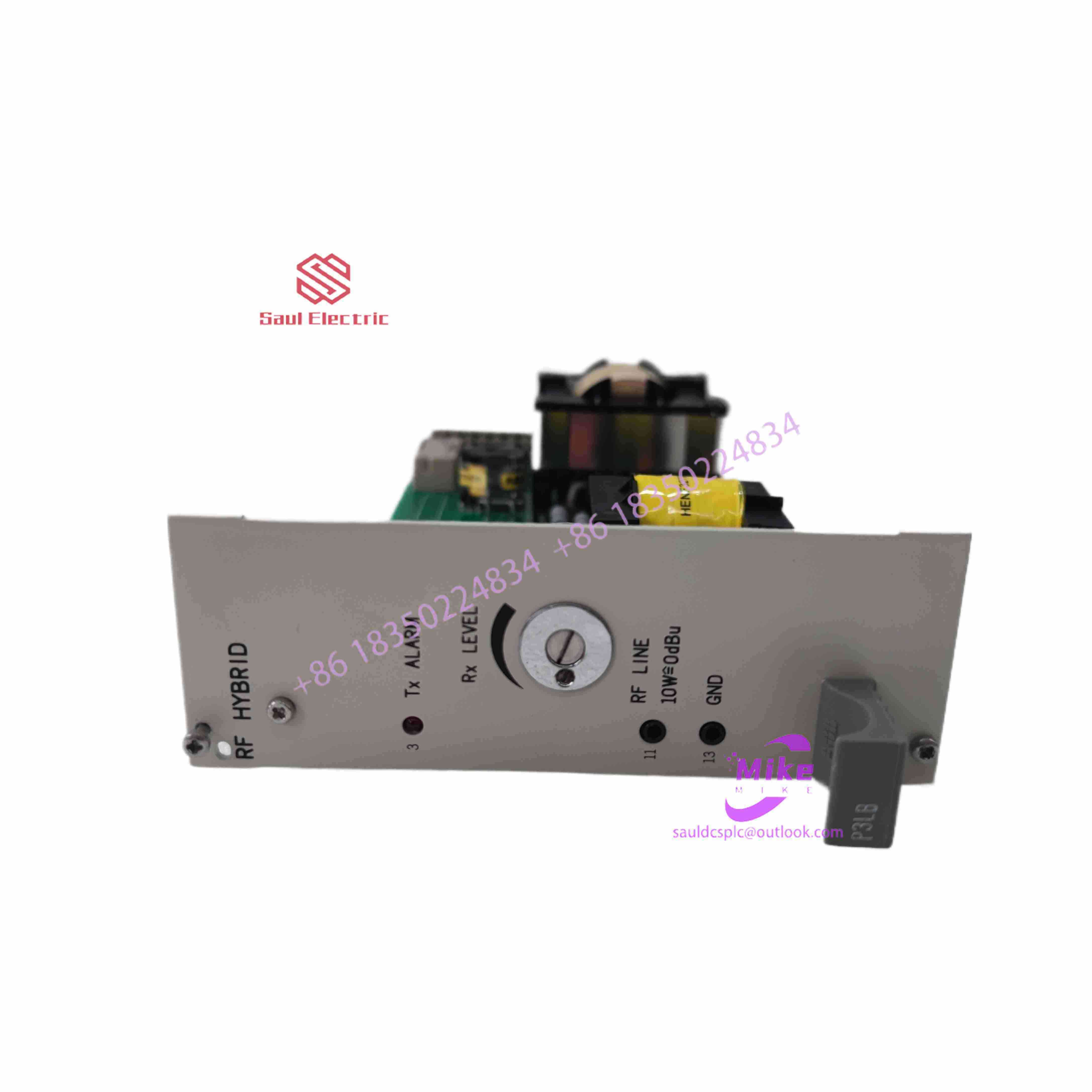
ABB HENF209568R0001 P3LB RF HYBRID





