


Description
Delta Tau ACC-51E | Dual-Channel Serial Encoder Interface
Dynamic Product Introduction
High-precision industrial automation systems increasingly rely on absolute encoders to eliminate the need for homing routines upon startup. The Delta Tau ACC-51E integrates these advanced absolute feedback devices directly into UMAC rack architectures, handling high-speed serial communication protocols like Heidenhain EnDat and Synchronous Serial Interface (SSI).
Whether you are controlling direct-drive linear motors or complex multi-axis rotary stages, this expansion card bridges the gap between digital serial absolute encoders and the PMAC motion processor. Maintaining legacy precision machinery relies on matching your exact encoder protocol and clock configurations—swapping interface boards without verifying firmware support will prevent proper position initialization.
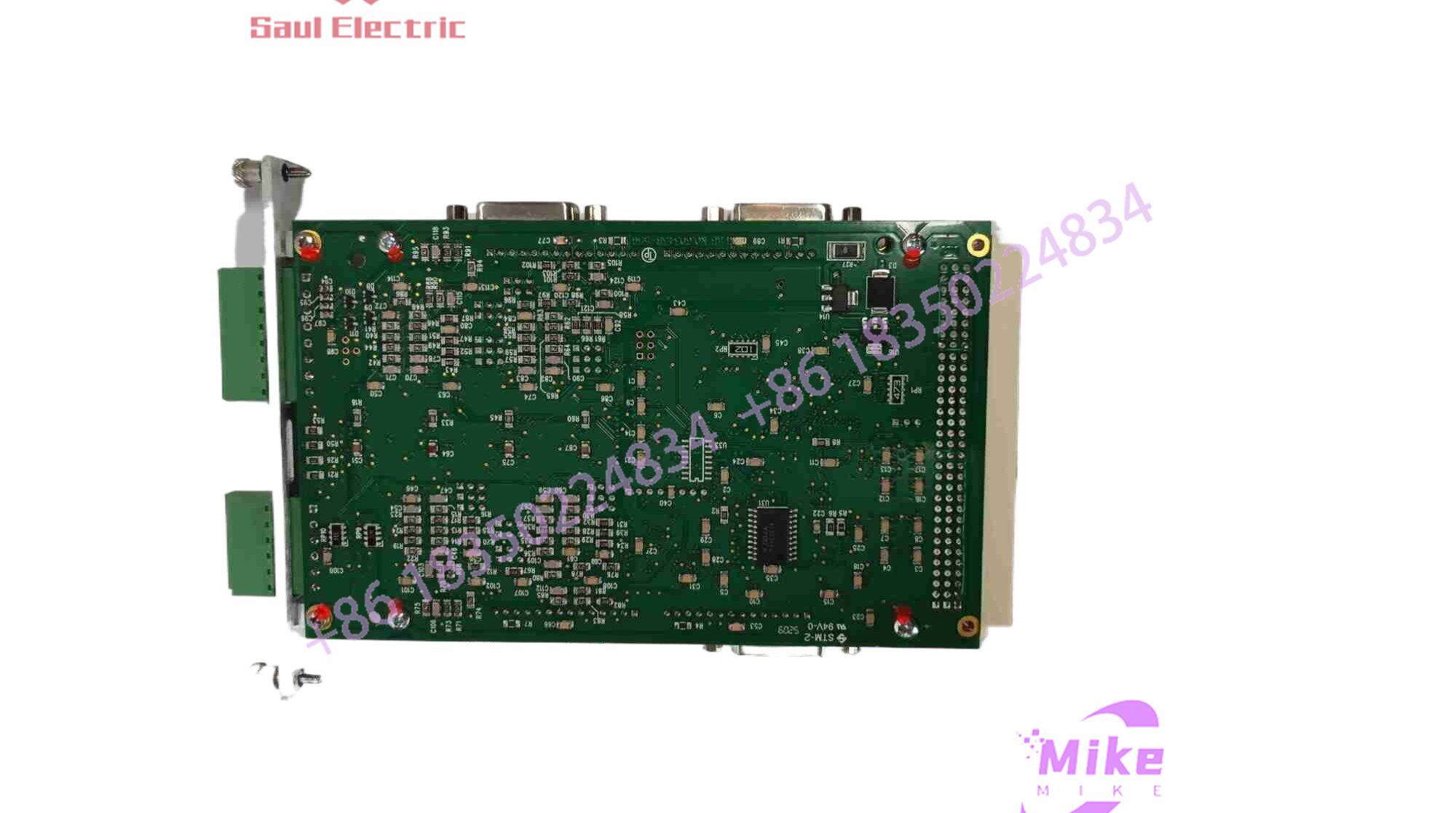
ACC-51E
Key Technical Specifications
| Parameter | Specification Detail |
| Primary Architecture | Dual-channel synchronous serial communication processor |
| System Compatibility | UMAC Turbo, Turbo PMAC, and compatible motion racks |
| Supported Protocols | SSI (Synchronous Serial Interface), Heidenhain EnDat, BISS (depending on firmware/build) |
| Channel Capacity | 2 independent absolute encoder channels per board |
| Clock Rates | Software-configurable clock speeds to match long cable runs and encoder specs |
| Field Termination | Standard industrial connector blocks / D-SUB interfaces |
| Form Factor & Mounting | 3U industrial rack-mount module (plugs into backplane expansion port) |
Global Sourcing & Live-Test SOP
Sourcing surplus serial interface cards requires rigorous electronic validation to ensure communication transceivers and clock drivers maintain signal integrity over long cable spans:
- Inbound Verification: Board part numbers, layout revisions, and backplane connector pins are audited against authentic Delta Tau build documentation.
- Live Rack Simulation: The card is mounted onto a verified UMAC test backplane, confirming proper communication registration and address mapping across the internal bus.
- Diagnostics: Using an absolute encoder simulator, we stream live SSI and EnDat frames into both channels. We verify that internal position registers lock correctly without bit-slipping, clock jitter, or communication timeout errors.
- Final Prep: Approved units are cleaned, fitted with protective connector covers, and sealed in heavy-duty anti-static moisture-barrier bags.
The Field Engineer’s Pitfall Guide
❗ Clock Frequency Mismatches: Setting the serial clock rate too high for long encoder cable runs will cause signal distortion and reflection, resulting in sporadic communication faults or invalid position reads. Always match your clock frequency to the encoder manufacturer’s cable length guidelines.
❗ Base Address Jumper Conflicts: The ACC-51E relies on physical switch or jumper settings to define its base memory address on the expansion backplane. Installing a replacement board without matching the original address offsets will cause communication blindness with the PMAC CPU.
❗ Hot-Plug Disasters: Never insert or remove an ACC-51E module into a live, powered UMAC rack. Doing so risks sending voltage spikes down the backplane bus, which can damage sensitive transceiver ICs or corrupt the rack’s power distribution board.
Intent-Driven FAQ
Can the ACC-51E process standard incremental quadrature encoders?
No. The ACC-51E is specifically engineered for synchronous serial absolute feedback protocols (such as SSI and EnDat). Standard incremental signals require alternative base cards like the ACC-24E2.
How many encoders can a single card interface with?
The standard card features dual-channel processing capability, supporting up to two independent absolute serial encoder devices per physical slot.
Do I need to modify my PMAC motion program when replacing this board?
If you are replacing an exact failed hardware match with identical base address switch settings, your existing configuration and encoder conversion scripts will run immediately upon boot.
What causes a “Communication Error” flag on an absolute channel?
This typically points to incorrect clock polarity settings, damaged or unshielded cabling allowing electrical noise to corrupt the data stream, or a failing absolute encoder.
What warranty is included with surplus units?
Every unit shipped from our stock is backed by a comprehensive 12-month operational warranty covering transceiver health, data register accuracy, and power regulation stability.





