


Description
ABB KVC758A124 3BHE021951R1024
Introduction to ABB KVC758A124 3BHE02195R1024 Dual Port Serial Communication Interface Module
ABB KVC758A124 3BHE021951R1024 is a dual port serial communication interface module in ABB’s power automation product line. Its core function is to establish a high-speed, electrically isolated serial data channel between DCS controllers and on-site intelligent devices. It is a standard communication bridge for traditional ABB control platforms (Advant Controller, Symphony INFI 90, Symphony Plus) to connect third-party devices such as turbine governors, protective relays, and smart meters.
core positioning
The module itself does not collect on-site process signals or execute control logic, but exists as a “communication protocol converter and electrical isolator” – converting the internal bus data on the DCS side into standard serial signals (RS-485/RS-422), transmitting them to the on-site equipment after electrical isolation, and returning the data returned by the on-site equipment to DCS as it is. Unlike ordinary serial port cards, KVC758A124 provides dual independent isolation channels that can simultaneously connect two devices of different protocols. It also achieves 2500V rms electrical isolation between the field side and the system side, effectively blocking the impact of grounding circuits and field transients on the DCS controller.
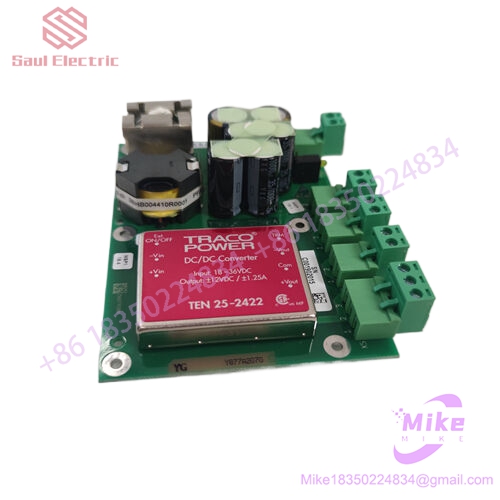
ABB KVC758A124 3BHE021951R1024
Basic Parameters
Material number: KVC758A124/3BHE02195R1024 (also known as 3BHE02195R0124, which may vary depending on version or batch)
Model: KVC758A124
Type: Dual Port Serial Communication Interface Module
Communication port: 2 independent isolated serial ports
Physical layer: RS-485/RS-422 (can be selected through jumper or software configuration)
Electrical isolation: 2500V rms between the on-site side and the system side
Baud rate: 300 bps to 115.2 kbps (configurable)
Data format: 7/8 data bits, 1/2 stop bits, even/odd/no parity check
Maximum cable length: up to 1200 meters (9600 bps, shielded twisted pair)
Power consumption: approximately 3W
Working temperature: 0 ° C to+60 ° C
Installation method: Symphony I/O subrack (single module width, DIN rail)
Compatible systems: Advant Controller AC 410/450/460, Symphony INFI 90, Symphony Plus (traditional support)
Main functional features
Multi protocol support: Built in Modbus RTU, RPWT (ABB Turbine Protocol), SPA (Protection Relay Protocol), and user-defined ASCII protocol, allowing direct communication with various field devices such as turbine governors, protection relays, and smart meters without the need for additional gateways.
Dual port independent communication: The two serial ports are completely independent and can simultaneously connect two field devices with different protocols and addresses without interfering with each other. For example, one is connected to a Modbus intelligent electricity meter, and the other is connected to an ABB turbine governor to realize simultaneous communication between two devices in the same module.
High level electrical isolation: 2500V rms isolation between the on-site side and the system side, far higher than the 1500V standard of ordinary communication modules, especially suitable for power plants and industrial sites with strong grounding circuits or high-frequency transient interference.
High speed long-distance transmission: up to 115.2 kbps baud rate, supports 1200 meter long-distance communication (shielded twisted pair) at 9600 bps, meeting the wiring requirements between controllers and remote field devices in large power plants.
Hot swappable support: Supports power on replacement in Symphony I/O subracks, maintenance can be completed without cutting off system power, reducing downtime risk.
Status indication: Equipped with LED status indicator lights, displaying TX/RX activity and link health status, providing intuitive communication status feedback, making it easy to quickly determine whether it is a module side problem or a line side problem on site.
Parameterized configuration: Supports online configuration of baud rate, data bits, stop bits, parity, protocol types, etc. through ABB’s dedicated industrial control software. The configuration takes effect in real time and reduces downtime for debugging.
Start self check: Automatically check the electrical ID of the module when powered on, and do not enter the running state when it does not match the configuration, to prevent communication abnormalities caused by mismatches.
Comparison with products in the same series
KVC758A124 is a dual port version, while KVC758A123 is a single port version. The electrical parameters of the two are completely identical, with the only difference being the number of channels – a single port is suitable for scenarios where only one on-site device needs to be connected, while a dual port is suitable for scenarios where two devices need to be connected simultaneously (such as a speed regulator and a protective relay).
KVC758A124 has similar functional positioning to CI858-1 (3BSE018137R1), but CI858-1 is a universal communication module of the Advant Controller series with a wider range of protocol support; KVC758A124 is designed specifically for Symphony INFI 90/Symphony Plus platforms, providing higher compatibility and spare parts availability in these traditional DCS systems.
Compared with PP877 (3BSE069272R2), KVC758A124 is a communication module in the PowerPanel series, designed for AC 800M DCS, while KVC758A124 is designed for the traditional Symphony platform. The two have different application scenarios and cannot be directly interchanged.
Typical application scenarios
Power industry: Communication between the DCS of the generator set and the ABB turbine governor, while connecting protective relays to achieve status monitoring. The dual port design precisely meets the dual device access requirements of “governor+relay”.
Oil and gas: serial data exchange between SCADA system and on-site RTUs, intelligent instruments, long-distance communication capability adapted to the wiring conditions of offshore platforms and remote well stations.
Heavy industry: Protocol conversion between Symphony Plus DCS and third-party devices such as frequency converters and soft starters, with electrical isolation function to protect DCS from the transient effects of high-power equipment switches.
Hydroelectric power station: serial communication between the monitoring system, gate controller, and water level sensor, with dual ports capable of simultaneously connecting two independent sensor circuits.





