


Description
ABB BRC300 | PHCBRC30000000 Process Control Module
Product Introduction
When a massive distributed control network in a power plant or petrochemical facility demands higher computational throughput without a total system rip-and-replace, bottlenecks threaten continuous uptime. The ABB Bailey BRC300 is not a generic automation PLC; it functions as a high-capacity Harmony Bridge Controller engineered to anchor complex loops within the Symphony Enterprise and INFI 90 OPEN infrastructure.
—though your mileage may vary depending on firmware release levels and backplane revision constraints—expect robust multi-function processing capable of handling advanced supervisory control, optimization routines, and data acquisition natively on the control rack. It slides directly into standard Module Mounting Units (MMUs), maintaining backward compatibility with legacy plant architecture.
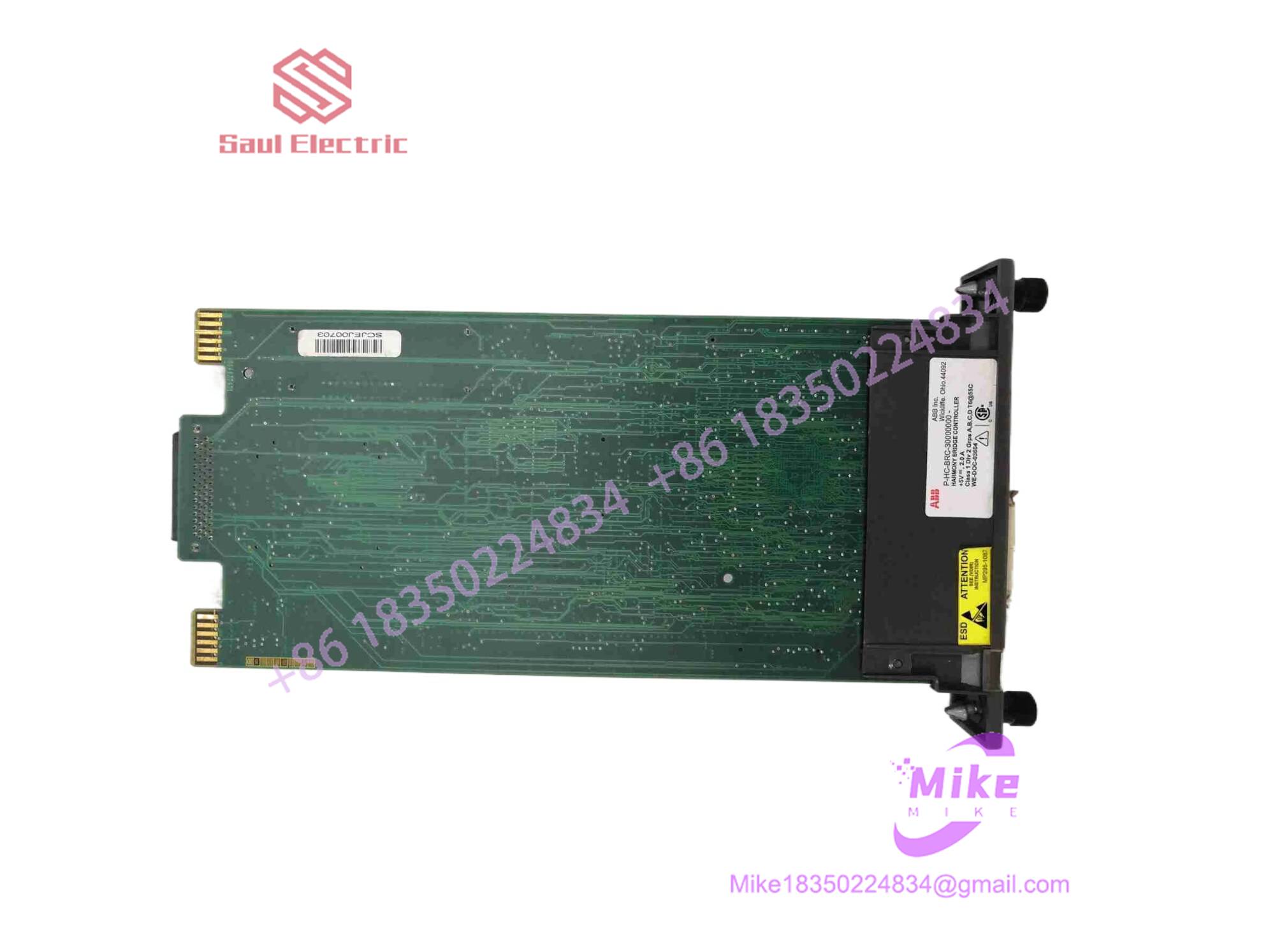
BRC300
Key Technical Specifications
| Parameter | Specification |
| Microprocessor | 32-bit Motorola ColdFire 5407 running at 160 MHz |
| System Memory | 8 MB SDRAM, 512 KB NVRAM, 2 MB Flash ROM |
| I/O Compatibility | Harmony Block I/O, Harmony Rack I/O, and S800 I/O lines |
| System Network | Controlway peer-to-peer and Harmony control network (Cnet) |
| Redundancy Options | Supports 1-for-1 physical hardware redundancy configurations |
| Programming Support | Function Codes (FC) and C language execution environments |
| Physical Dimensions | Faceplate width: 35.56 mm (1.4”), Height: 177.80 mm (7.0”) |
| Operating Temperature | 0^\circC to +70^\circC (32^\circF to 158^\circF) |
Application Scenarios & Pain Points
- Power Generation Boiler Control: Large-scale utility boilers requiring sub-second loop execution and high availability rely on the BRC300’s TMR/redundant bridge capability to prevent catastrophic trips.
- Refinery Continuous Distillation Units: Manages heavy calculation loads for multi-variable optimization and complex feedback loops without requiring an external host mini-computer.
- Legacy INFI 90 System Migrations: Upgrading older network nodes to the BRC300 injects modern processing power directly into existing racks without forcing a complete cabinet rewiring.
QA & Live Testing SOP (Trust Signal)
We evaluate critical distributed control modules under strict industrial verification standards prior to shipment:
- Visual & Faceplate Inspection: Inspected for clear LED indicator window integrity, latching screw condition, and zero corrosion on edge-card connector fingers.
- Static Board-Level Resistance Check: Power and ground bus lines are verified with meters to ensure complete absence of short-circuits.
- Chassis Integration Test: Inserted into a dedicated Harmony test rig to verify backplane handshakes, communication network (Cnet) login, and bootloader integrity.
- Memory & Battery Backup Validation: NVRAM and flash read/write operations are stress-tested to ensure reliable program and configuration retention.
- ESD Anti-Static Packaging: Sealed in heavy-duty moisture-barrier anti-static bags surrounded by shock-mitigating foam.
Field Engineer’s Pitfall Guide
- ❗ Hot-Insertion Hazard: Never insert or remove a BRC300 module from a live, powered Module Mounting Unit (MMU) unless executing an approved redundant swap procedure; doing so can corrupt backplane buses or cause system node drops.
- ❗ Firmware/Configuration Mismatch: Ensure the controller configuration file matches the exact firmware revision loaded on the board; mismatched logic maps will throw configuration error faults on start-up.
- ❗ Battery Backup Maintenance: Neglecting to check the onboard lithium battery voltage cycle can lead to loss of volatile/NVRAM configuration data during unexpected plant power outages.
Intent-Driven FAQ
Is the BRC300 compatible with older INFI 90 systems?
Yes. The is fully backward compatible with the INFI 90 OPEN architecture in terms of physical packaging, communication protocols, and core functionality.
Does the support redundant configurations?
Yes. It supports a 1-for-1 physical hardware redundancy scheme, allowing a secondary backup controller to mirror operations and take over seamlessly if the primary unit fails.
What programming languages can be deployed on this controller?
The supports traditional Harmony Function Codes (FC) as well as C language applications for advanced data processing routines.
What do the front faceplate LEDs indicate?
They provide real-time diagnostic indicators regarding processor health, hardware error status, network communication traffic, and primary/backup redundancy handshakes.
Are these units available as brand-new factory-sealed stock?
Because this model spans legacy industrial automation lifecycles, they are predominantly sourced as fully tested, certified surplus, factory-refurbished, or occasionally new-in-box inventory through specialized suppliers.





